Hermann Oak leather
Every belt begins with Hermann Oak leather made in the United States. It gives the piece a substantial foundation and takes stamped impressions and finish in a way that keeps the surface from looking flat or manufactured.
 Southwest
Made in Gold Canyon, Arizona
Start with the buckle you love and the belt that already feels right. Southwest Distinctions turns those practical details into a custom leather belt made by hand from Hermann Oak leather, with the color, texture, and character you want to wear.

A belt built for use
A custom leather belt should do more than carry a buckle. It should sit comfortably, suit the way you dress, and look considered when someone notices the leather up close. That begins with the dimensions you already trust, then leaves room for the choices that make a belt personal: the leather color, the profile, the stamped detail, and the amount of beadwork you want in the finished piece.
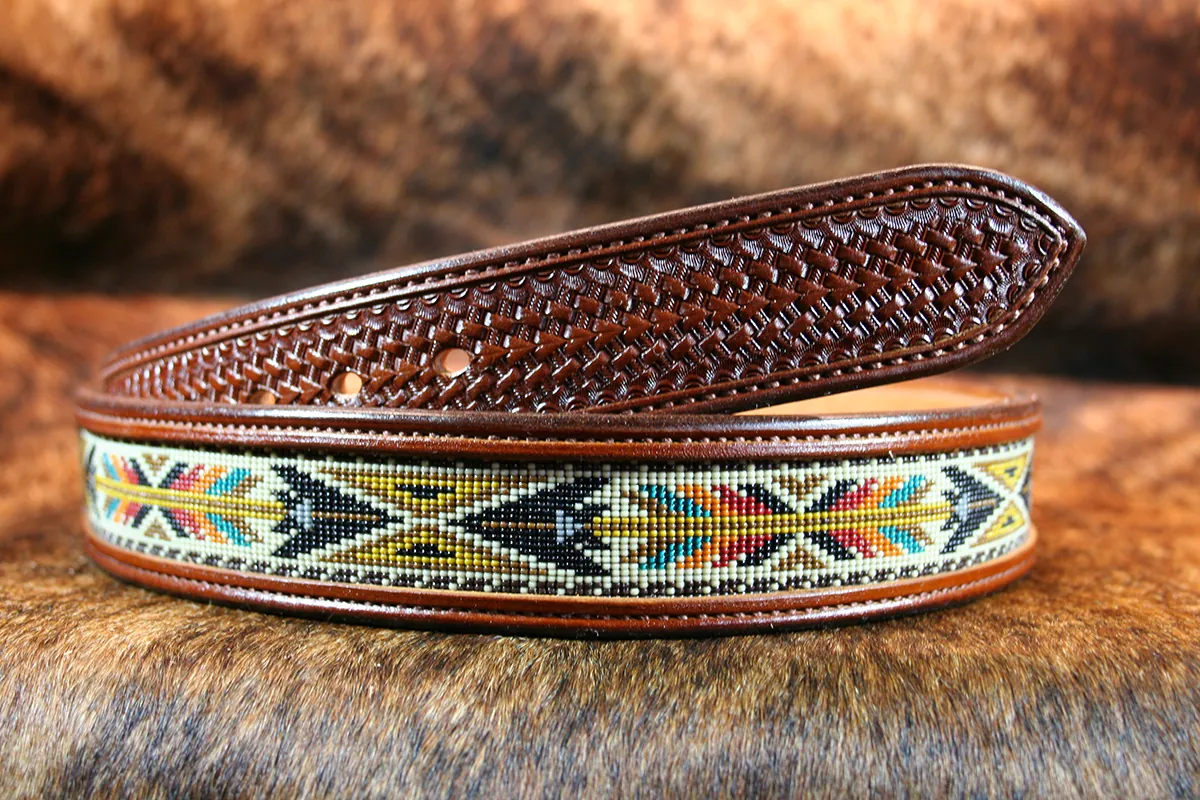
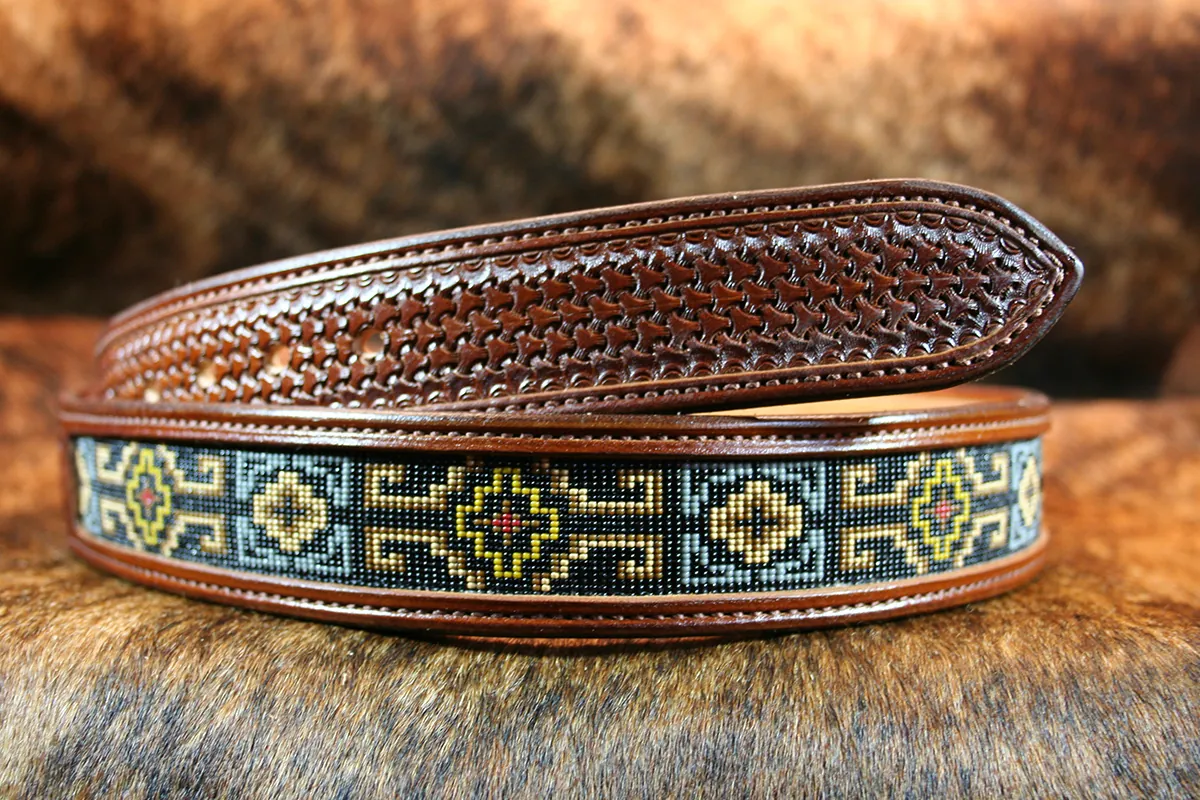
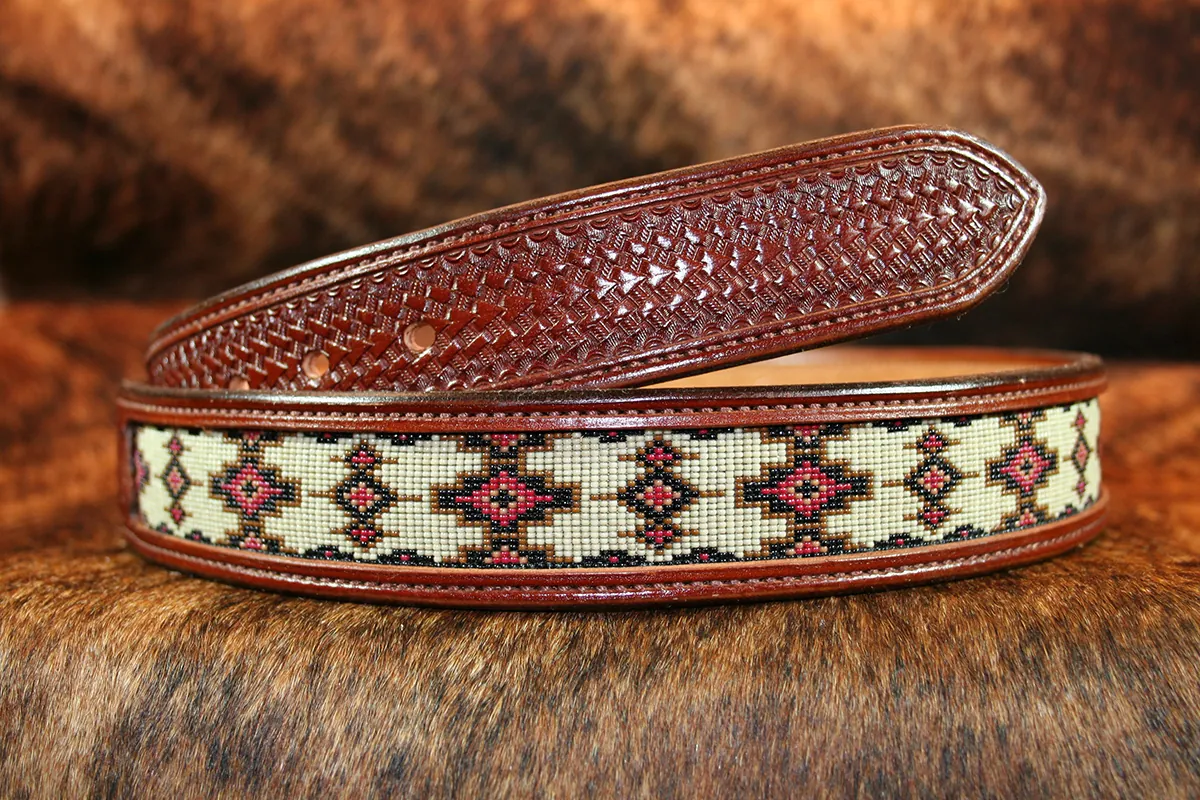
Don and Barb Mohr make each belt in Gold Canyon, Arizona. Don shapes, stamps, lines, and finishes the leather. Barb creates beadwork panels on a loom, one bead at a time. Their work is especially suited to people who want a belt with the honest presence of handmade leatherwork, whether the final piece stays simple around a favorite buckle or carries more color and pattern.

Begin with what works
Do not start with a pants size. Start with a belt you wear often because it feels right. Measure from the hole you use to the fold line where the leather meets the buckle. That tells the makers where the new belt needs to fasten and avoids the guesswork that comes with a stock size.
A favorite buckle is just as useful. A straight profile gives the leather an even line from end to end. A tapered profile narrows toward the buckle and can be a better fit for a smaller buckle or a traditional silhouette. Both shapes can stand on their own in clean leather or become a setting for a stamped border, carved billet, or beaded inlay.
The belt measurement guide shows the same practical method used for custom work. Bring a measurement and a photo of your buckle if you have one. That is enough to start a grounded conversation about the belt you want to wear.
The work behind the belt
Every belt begins with Hermann Oak leather made in the United States. It gives the piece a substantial foundation and takes stamped impressions and finish in a way that keeps the surface from looking flat or manufactured.
Arrow stamping, carved billets, and tooled details add depth to the leather. These are not generic printed patterns. They are chosen to support the buckle, frame a beaded panel, or give a quieter belt enough texture to feel individual.
When beadwork belongs in the design, Barb weaves it by hand on a loom. The panel is set into the leather rather than treated as a last-minute decoration, so color and pattern become part of the belt’s visual structure.
Southwest Distinctions belts are fully lined. The topstitching sits down in a groove in the leather, helping protect the thread while giving the finished edge a clean, intentional appearance.
Choose the right amount of detail
Think first about where the belt will live in your wardrobe. A daily belt may be best in dark brown, black, or natural leather with a stamped treatment that gets better the longer you own it. A belt for a particular buckle, pair of boots, or special occasion may be the right place for a wider inlay, a bolder color combination, or more decorative leatherwork.
Then choose the detail that matters most. It might be a modest border around the buckle, a carved leather billet, a geometric beaded panel, or a single color that belongs with pieces you wear often. Focusing on one direction gives the leatherwork room to breathe and lets the craftsmanship carry the final design.
Browse the handmade belt collection for real examples of how leather color, shape, stamping, and beadwork change the character of a piece. You do not need to identify every detail by name. A photo, a favorite color, or a clear sense of how you plan to wear the belt will give Don and Barb something useful to build from.
A meaningful buckle can be the center of the whole piece. The leather behind it should make that buckle look at home, while still carrying enough character to feel like a complete belt. A restrained stamped pattern can do that quietly. A tapered end can make the proportions more natural. A small amount of color can bring together a buckle and the rest of an outfit without making the design feel crowded.
That is the advantage of custom work. The belt does not have to be a standard strap with decoration applied afterward. Its shape, fit, leather color, and details can all begin with the buckle and the person wearing it.
The most useful note includes the belt measurement, the buckle you plan to use or the style you prefer, and whether you are leaning toward straight or tapered. Add what you know about leather color, a stamped treatment, beadwork, or the situations when you want to wear the finished belt.
You do not need a finished sketch or a long list of leatherworking terms. A snapshot of a buckle, a color you keep reaching for, or a favorite belt that never quite fit properly all give the process an honest starting point. The details can become more specific as the idea takes shape.
Made to stay in rotation
A custom leather belt becomes more useful when it is built around something real: your measurement, the buckle you wear, the colors that belong with your wardrobe, and the level of detail that feels like you.
See the finished work, then use the custom order page when you are ready to share the practical details. Don and Barb will use them to shape a belt with a fit and character that make sense long after the first wear.
Start a custom order
See the finished work
Frequently asked questions
Start with the measurement from a belt you already wear comfortably, then share your buckle, preferred shape, and any ideas about leather color or detail through the custom order page. A complete drawing is not necessary.
Measure from the hole you use on a belt that fits to the fold line where the leather meets the buckle. That measurement shows where the new belt needs to fasten and is more useful than a pants size.
Yes. A favorite buckle is an excellent starting point. A photo or a note about its size helps Don and Barb consider whether a straight or tapered profile is the better match.
You can discuss leather color, a straight or tapered shape, hand-stamped or carved details, beadwork, and accents such as conchos or turquoise. The choices are shaped around the way you plan to wear the belt.
A belt that starts with you
A good custom order begins with a few things you already know and turns them into a belt made for the way you wear it.