Made in Gold Canyon, Arizona

Hand-Tooled Leather Belts Made to Order

Southwest Distinctions makes hand-tooled leather belts for people who want the leather itself to carry the character. Each piece begins with a fit and buckle shape that make sense for you, then takes shape through Hermann Oak leather, hand-worked detail, and the level of color or beadwork you want to wear.

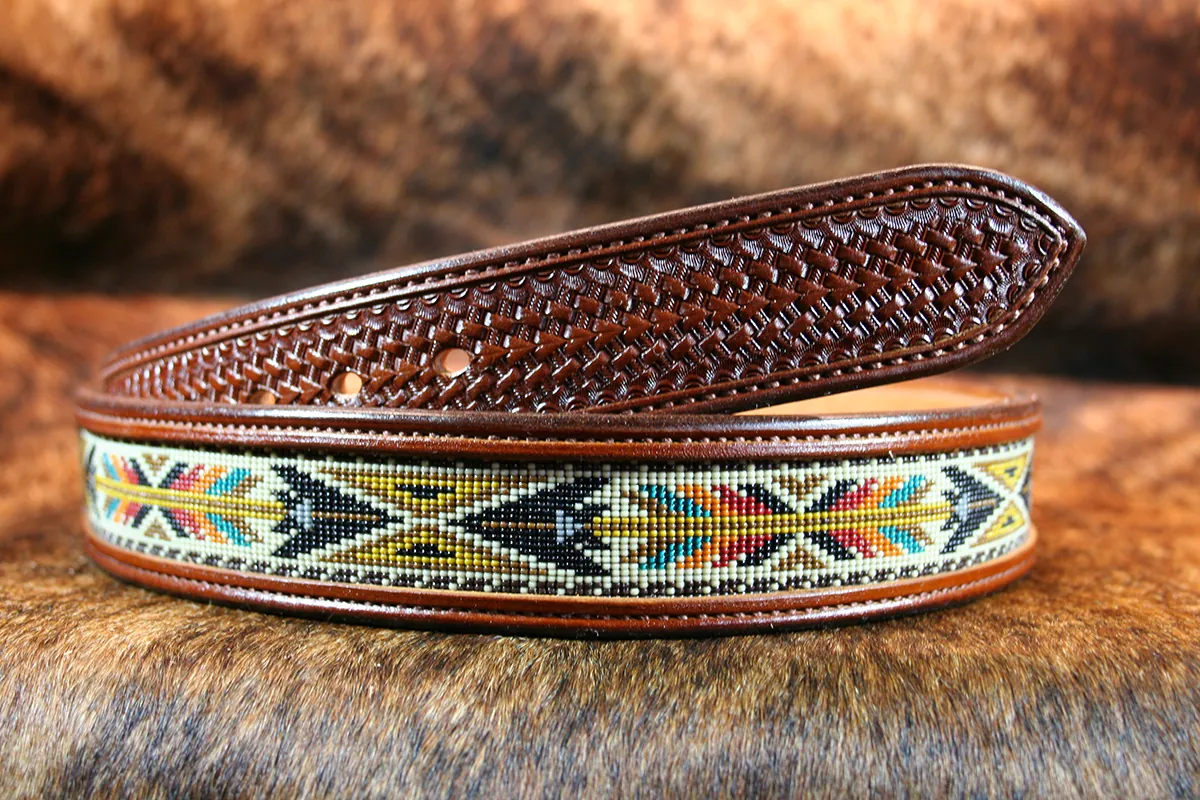
Handmade brown leather belt with detailed leatherwork and a colorful beaded inlay

Leather with a point of view

Let the texture do more than fill the space.

A hand-tooled belt feels different because its detail is worked into the leather instead of placed on top of it. A stamped border catches the light at an angle. A carved billet gives the buckle a purposeful setting. A quieter pattern can make an everyday belt feel considered, while a fuller composition can give a special piece its own presence without needing to shout.

Don and Barb Mohr make each belt by hand in Gold Canyon, Arizona. Don cuts, shapes, lines, stamps, carves, and finishes the leather. Barb hand-looms beadwork one bead at a time when a design calls for color and pattern. Together, those skills make room for a belt that can stay focused on the leatherwork or use beadwork as a carefully framed part of the whole.

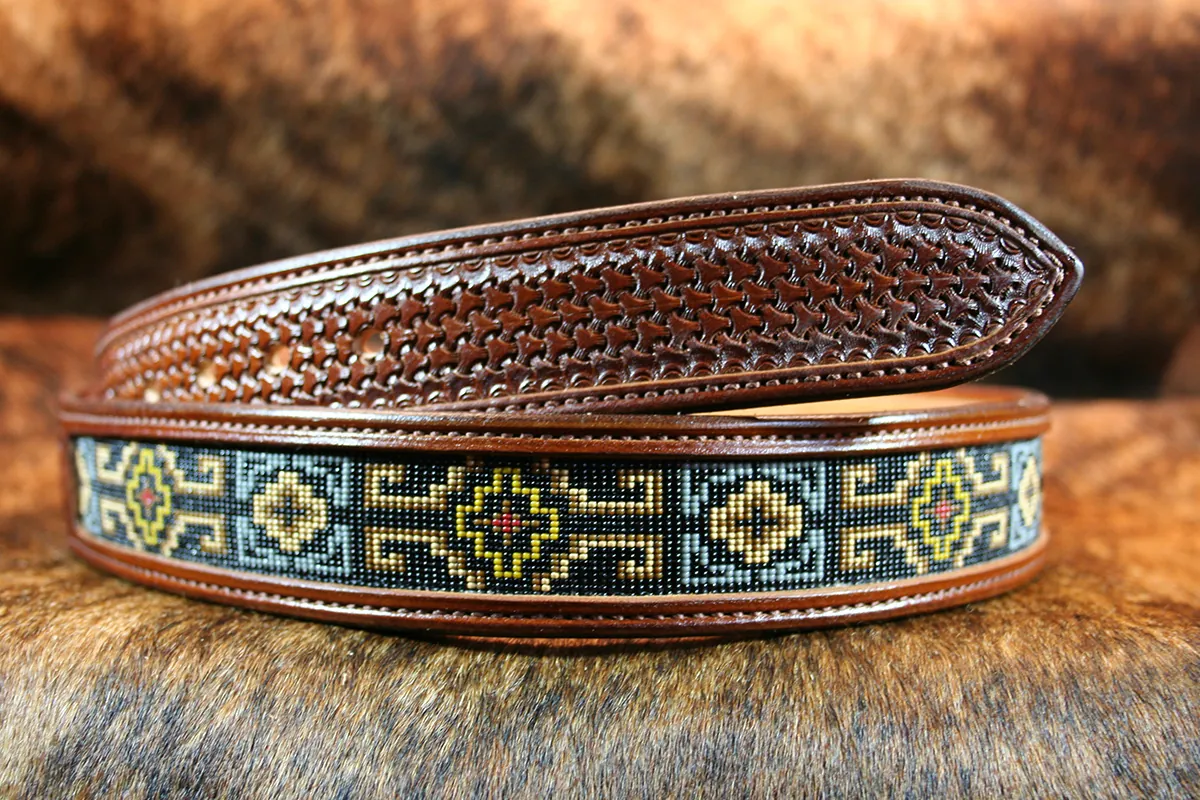
Brown leather belt with hand-worked leather detail and a beaded inlay

Start with fit and proportion

The right blank canvas is a belt that already fits your life.

The most useful place to begin is a belt you know feels right. Measure from the hole you use to the fold line where the leather meets the buckle. That gives Don and Barb a clear starting point for the center hole on the new belt, without asking a pants size to do work it cannot do.

Your buckle guides the rest of the proportions. A straight profile keeps an even width through the belt and gives leatherwork a broad, steady field. A tapered end narrows toward a smaller buckle and can create a more traditional profile. The belt measurement guide shows the same process used for made-to-order work, so you can begin with information that is actually useful.

Once the fit and buckle are settled, the leatherwork has a job to do. It can keep attention on a treasured buckle, frame a beaded panel, or become the primary detail of a belt designed to be noticed. Those choices work best when they grow from how you will wear the piece.

How the work comes together

Detail that belongs to the construction.

Hermann Oak leather

Every belt begins with Hermann Oak leather made in the United States. Its substance gives the leatherwork a solid foundation, holds a crisp impression, and develops character through real use rather than looking worn out after a season.

Stamped and carved by hand

Arrow-stamped patterns, carved billets, and hand-tooled details create texture with variation and depth. The design can run as a quiet border, work around a buckle, or give a plain leather field enough interest to stand on its own.

Beadwork when the design calls for it

Barb weaves beadwork on a loom, one bead at a time. When it belongs in a belt, the panel is set between layers of leather so the leatherwork and beadwork read as one considered piece instead of competing decorations.

Lined and finished for wear

Southwest Distinctions belts are fully lined, with topstitching set into a groove in the leather. That practical choice helps protect the thread and gives the edge a clean finish that holds up to regular use.

Choose a direction

Good tooling is about rhythm, not clutter.

A hand-tooled belt can be simple and still feel rich. A warm brown belt with a stamped border might be exactly right for a buckle you wear every week. A darker leather can make carved detail feel more reserved. Natural leather can bring the texture forward. The strongest choice is usually the one that makes the belt more useful to you, not the one that piles the most elements into the same space. The handwork should reward repeat wear, not demand attention every time you get dressed.

Think about the impression you want the belt to make from across the room and then up close. A broader, more detailed treatment can suit an occasion piece or a belt built around a favorite pair of boots. A restrained pattern can reward a closer look while still fitting easily into everyday wear. Either way, the leather color, width, buckle, and tooling need to agree before optional beadwork or hardware is added.

The Western belt collection is a useful place to see real combinations of stamped leather, carved billets, beadwork, and different belt shapes. Look for the treatment that keeps pulling you in. A photograph of a belt, buckle, pair of boots, or color you already love can make the first custom-order conversation much easier.

Build around the belt’s real job.

A belt that will be worn most days needs a design that stays satisfying after the novelty fades. That can mean a hand-tooled border that works with more than one outfit, a leather color that ages gracefully, and a shape that supports the buckle you actually reach for. The best custom piece is not a costume, it is a useful object with more character than something pulled from a rack.

A special-occasion belt can move in another direction. It might hold more color, a larger beaded panel, a bolder carved area, or a treatment chosen for a particular outfit. The point is not to make every belt look alike. It is to make the details match the place the piece will have in your wardrobe.

Bring a few useful details to the first note.

A made-to-order belt starts easily with your measurement, the buckle you plan to use or the buckle style you prefer, and whether you are leaning toward straight or tapered. Add notes about leather color, how much tooling feels right, and whether beadwork or a carved billet belongs in the design.

You do not need to arrive with a finished drawing or a list of technical terms. A favorite belt that nearly works, a buckle you have kept for years, or a clear sense of where you want to wear the finished piece gives Don and Barb an honest foundation for the conversation. From there, the handwork can stay true to the choices that matter instead of following a stock formula.

Made to be kept

Give a favorite buckle a belt with some depth behind it.

Hand-tooled leather has a way of gaining character as it becomes part of your routine. A proper fit, lined construction, and considered detail turn it from a decorative idea into a belt you want to keep reaching for.

Browse finished examples, then start a custom order when you are ready to share your measurement, buckle, and the direction you have in mind.

Start a custom order
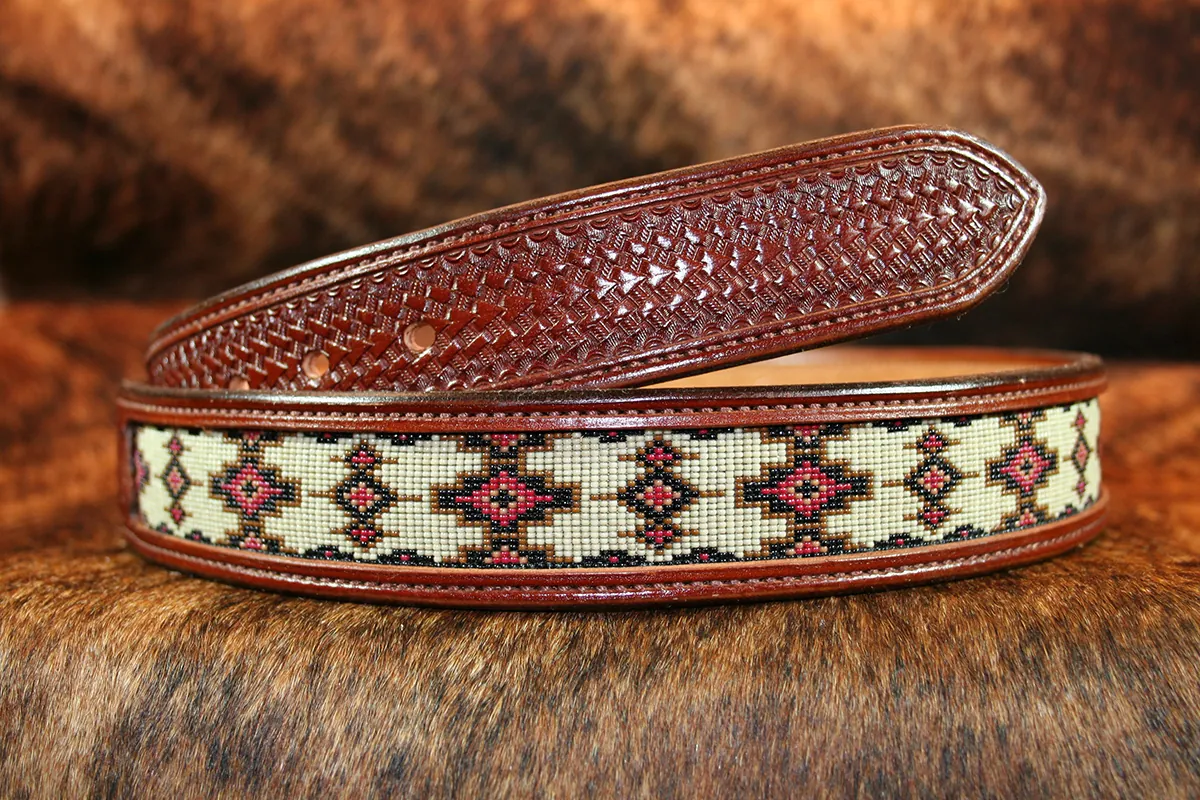
Handmade brown leather belt with detailed leatherwork and a horsehair beaded inlay

See the finished work

Handmade belts from the collection.

View all handmade belts

Frequently asked questions

Hand-tooled leather belt questions.

What is a hand-tooled leather belt?

A hand-tooled leather belt has its surface shaped by hand through stamping, carving, or both. The leatherwork gives the belt texture and depth instead of relying on a printed pattern.

Can a hand-tooled belt be made for my own buckle?

Yes. A photo or note about your buckle helps Don and Barb decide whether a straight or tapered belt profile will give it the best proportions.

How should I measure for a made-to-order belt?

Measure a belt that fits you well from the hole you use to the fold where the leather meets the buckle. That shows where the new belt needs to fasten and is more reliable than using a pants size.

Can I add beadwork to a tooled leather belt?

Yes. Hand-loomed beadwork can be set into a tooled leather belt when it suits the design. The leatherwork can frame the beaded panel so both details have room to show.

Start with what you know

Bring the buckle, the measurement, and the first idea.

A few real details are enough to begin a belt made around the way you wear it.

Start a custom order