Made in Gold Canyon, Arizona

Custom Bass Guitar Straps Made for the Player

A bass asks a strap to carry real weight without getting in the way of the way you move. Southwest Distinctions makes custom leather bass guitar straps around your instrument, playing height, and the shoulder support that lets you stay with the music.

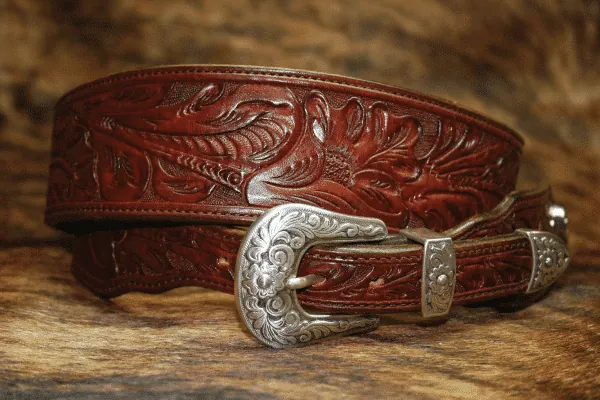
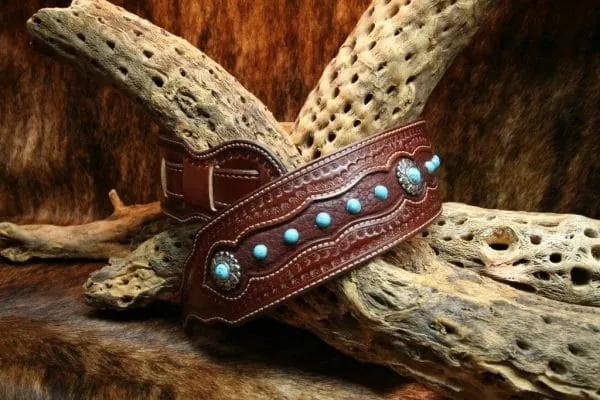
Wide handmade brown leather guitar strap with turquoise studs and silver conchos

Built for the low end

Start with the bass on your shoulder.

A bass can feel very different from one song to the next. The instrument may be light and balanced, long and neck-heavy, or substantial enough that a thin strap becomes the first thing you notice. A custom build gives you room to begin with the useful questions: where the bass hangs, how long you stand, and whether the shoulder section needs more width, padding, or adjustment.

Don and Barb Mohr make each piece by hand in Gold Canyon, Arizona. Don cuts, shapes, lines, and finishes Hermann Oak leather. Barb creates loom-woven beadwork one bead at a time when a design calls for it. The result is a strap with a working job, a substantial leather foundation, and details that can feel as individual as the bass it carries.

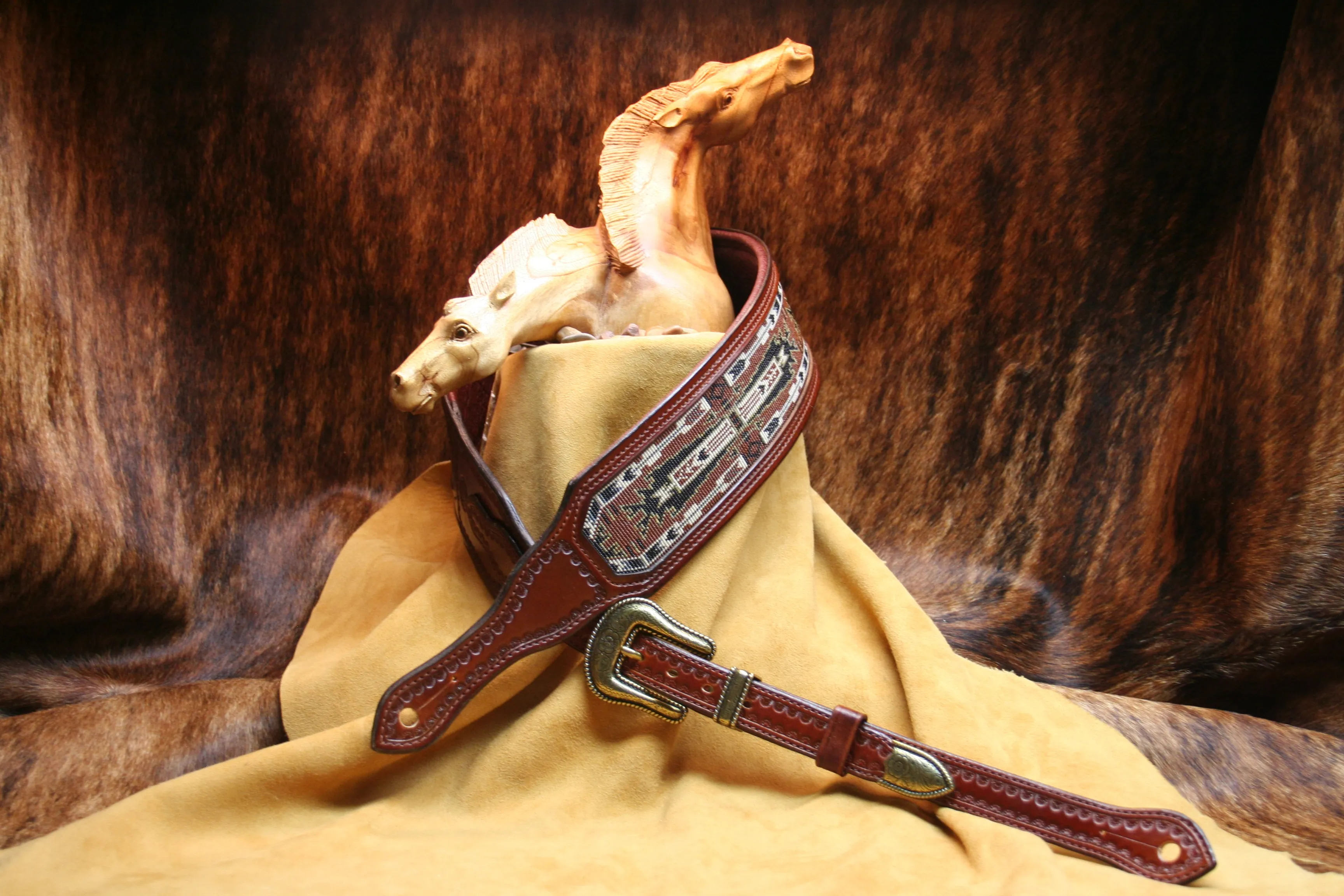
Handmade leather strap with a wide shoulder section and beadwork

Support before decoration

Let the way you play guide the build.

Put the bass on at your normal standing height and play a few lines you know well. Move to a higher position on the neck, then settle into a groove. Notice whether your shoulders relax, whether the instrument stays where you expect it, and whether a narrow edge begins to make itself known after a few minutes. Those observations are more useful than choosing a pattern first.

Width and padding solve different parts of the question. A broader shoulder section can spread the instrument’s load over more of your shoulder. Padding can soften the contact point when the overall fit is already right. An adjustable fitting gives room to refine the height or share the strap between basses. A fixed length can feel clean and settled when the position is already proven. None is a default for every player.

The leather bass guitar strap guide goes deeper into fit, comfort, and everyday checks. When you are ready to turn those notes into a made-to-order piece, a photo of the bass and a few details about your routine give the conversation a strong start.

The choices that count

Comfort that holds up through the set.

Playing height

There is no required bass height. Some players keep the instrument high and close, while others need more length and room to move. The right position is the one that lets both hands work naturally without a raised shoulder or an awkward fretting wrist. Measure while the bass is on your body, not while the strap is lying on a table.

Shoulder support

A wider shoulder section can make a meaningful difference when the bass feels concentrated in one spot. A padded build can add a more cushioned feel. The goal is not to make the strap bulky. It is to choose the amount of support that suits the instrument, the session length, and the way you move.

Attachment and hardware

Before a strap is made, look at the button placement and the leather ends you trust on the bass. A good connection starts with ends that seat fully under the button heads and hardware that stays clear of pressure points. If you use a locking system, its compatibility belongs in the plan from the beginning.

Leatherwork and color

Dark brown, brown, black, and natural leather each change the character of a bass. Hand tooling can add texture. A loom-woven inlay can bring color and pattern. Turquoise details or conchos can make a stronger visual statement. Once the strap has its working job sorted, the design can become personal without competing with the instrument.

Bring the useful details

A custom bass strap begins with a real playing routine.

Think about the hours the strap needs to handle, not just the first minute you put it on. A bass used for a short home session has different needs from one worn through rehearsal, a recording day, or a long live set. If a current strap starts feeling sharp after three songs, slides when you move, or leaves the bass just out of reach, say so. Those details help determine whether the answer is a different width, more adjustment, a padded shoulder section, or a change in playing height.

A photo helps show the body shape, finish, strap-button layout, and hardware color. A second photo with the bass in playing position can be useful when you already know how low or high you like it to sit. Then add the details that are already clear to you: fixed or adjustable fittings, leather color, a quieter tooled border, a hand-beaded panel, or a piece that takes a more visible role onstage. You do not need a finished drawing before getting in touch.

The current guitar strap collection is a good place to see the range of hand-finished leather, beadwork, and shoulder shapes. Browse for direction, not a copy. A custom strap works best when it takes the practical lessons from your own bass and brings in the visual details that belong with it.

Make comfort a full-session decision.

A strap can feel fine at first and still become distracting after an hour. Test your current setup while you play the passages that make you shift position, look down at the neck, or move across the stage. If you start leaning the bass against your hip, lifting a shoulder, or changing your hand position to compensate, the strap is asking too much from the rest of your body.

That does not mean every bass needs the widest, most padded strap available. A heavier build can feel more substantial than a lighter instrument needs, while a slim build can be exactly right when the bass is balanced and the playing height is settled. The point is to choose the construction from what you feel over time, not from a one-size-fits-all label.

Let the bass keep its own character.

A bass has a long visual line, and the strap becomes part of it. A broad shoulder section gives tooling or beadwork room to read from a distance. A quieter leather strap can let a figured top, a bold pickguard, or distinctive hardware stay in charge. Either direction can work when one clear idea leads the design.

Natural and brown leather can bring warmth beside wood grain. Dark leather can frame a lighter finish. A stamped border, a woven inlay, or a few well-placed details can be enough to make the piece feel intentional. The strongest result is not the one that matches every color exactly. It is the one that looks like it belongs with the bass every time you pick it up.

Made for the bass you keep reaching for

Get the fit right, then make it yours.

A custom bass strap should carry its share of the instrument’s weight, stay predictable at the connection points, and feel considered through a full set. The leatherwork comes alive when it follows those practical decisions instead of covering them up.

Southwest Distinctions brings the instrument, the player, and the handwork into the same conversation. Start with the bass, your playing height, and what you want to change from your current strap. From there, leather, width, padding, tooling, and beadwork can take shape around a piece of gear built to be used.

Start a custom order
Detailed hand-beaded inlay set into a leather guitar strap

See the craftsmanship

Handmade leather straps from the collection.

View all guitar straps

Frequently asked questions

Custom bass guitar strap questions.

Can you make a leather strap for a bass guitar?

Yes. Southwest Distinctions makes leather straps around the instrument and player. A photo of the bass, the way you wear it, and the support you want from the shoulder section are useful places to begin.

Should a custom bass strap be wide or padded?

That depends on the bass and the way it feels over a full session. A wider shoulder section can spread the load, while padding can change the contact feel. The most useful choice begins with your playing height and where your current strap becomes uncomfortable.

Can a bass guitar strap be adjustable?

Yes. Adjustable fittings can be useful when you move between basses, play seated and standing, or are still finding the height that feels natural. A fixed length can be a good choice when one bass always hangs in the same place.

What should I send with a custom bass strap order?

A photo of the bass, your preferred playing height, whether you play long standing sets, and a few notes about leather color or design are enough to start. If your current strap feels too short, narrow, or awkward, include that too.

Your bass, your fit

Bring the bass and the way you play.

A few real details are enough to begin a strap made around your instrument.

Start a custom order