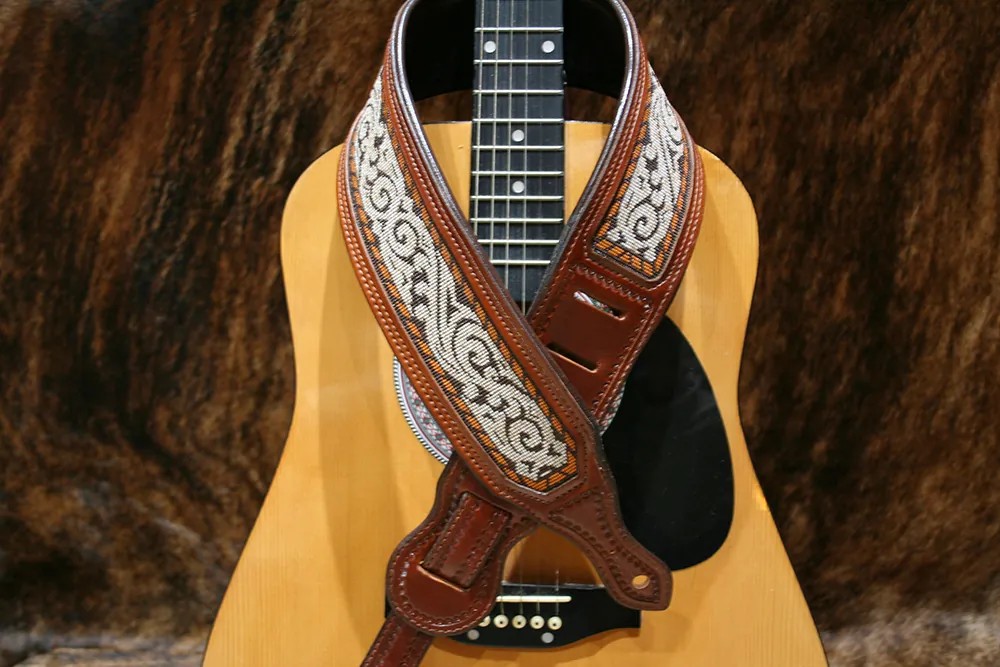
Hand-tooled leather
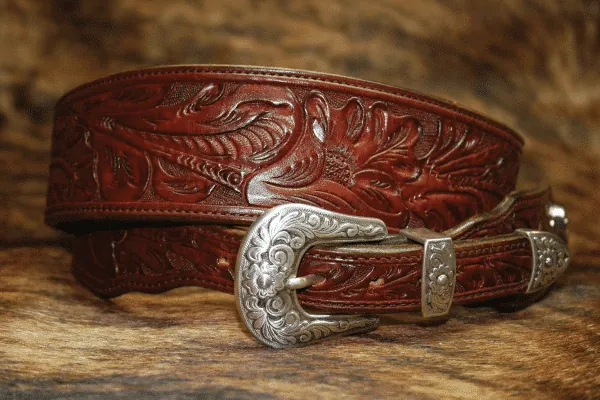
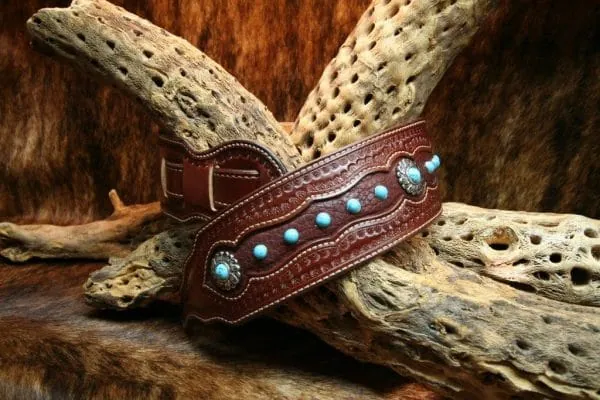
Stamped and tooled leather gives the strap a depth that changes in the light and grows more personal with use. It can frame a simple instrument without overpowering it, or set the foundation for a bolder Western look.
 Southwest
Made in Gold Canyon, Arizona
A guitar strap carries the instrument, but it also becomes part of the way it feels and looks in your hands. Southwest Distinctions makes custom leather straps around the guitar, the player, and the details that make the piece yours.
Built around your guitar
Some guitars call for a quiet, hand-tooled leather strap. Others want color, beadwork, conchos, or a design that carries as much presence as the guitar itself. The right choice is not pulled from a wall of identical options. It starts with the instrument you play, the height where you wear it, and the kind of detail you want people to notice.
Don and Barb Mohr build each piece by hand in Gold Canyon, Arizona. Don cuts, shapes, stamps, and finishes the leather. Barb creates hand-loomed beadwork one bead at a time, then the two crafts come together in a strap made for regular use and lasting character. The result has the substance of traditional leatherwork and the visual identity of a personal piece of gear.
Fit comes first
A strap can be fixed length when one guitar always sits at the same height, or adjustable when you move between guitars, playing positions, or stages. Either way, the goal is the same: the guitar should land where it feels natural before you think about the decoration.
For a heavier solidbody, a broader shoulder section or padded construction can make the carry more comfortable over a rehearsal, gig, or long session. A lighter acoustic or hollowbody may suit a simpler build. Southwest Distinctions straps are available with padded or non-padded construction, so the structure can match the instrument instead of forcing every player into one pattern.
Before ordering, measure with the guitar at your regular standing height. The measurement guide explains the starting point. If you already know the strap style you want, a photo of the guitar and a note about where you like it to hang will help turn that preference into a useful conversation.
The details matter
Stamped and tooled leather gives the strap a depth that changes in the light and grows more personal with use. It can frame a simple instrument without overpowering it, or set the foundation for a bolder Western look.
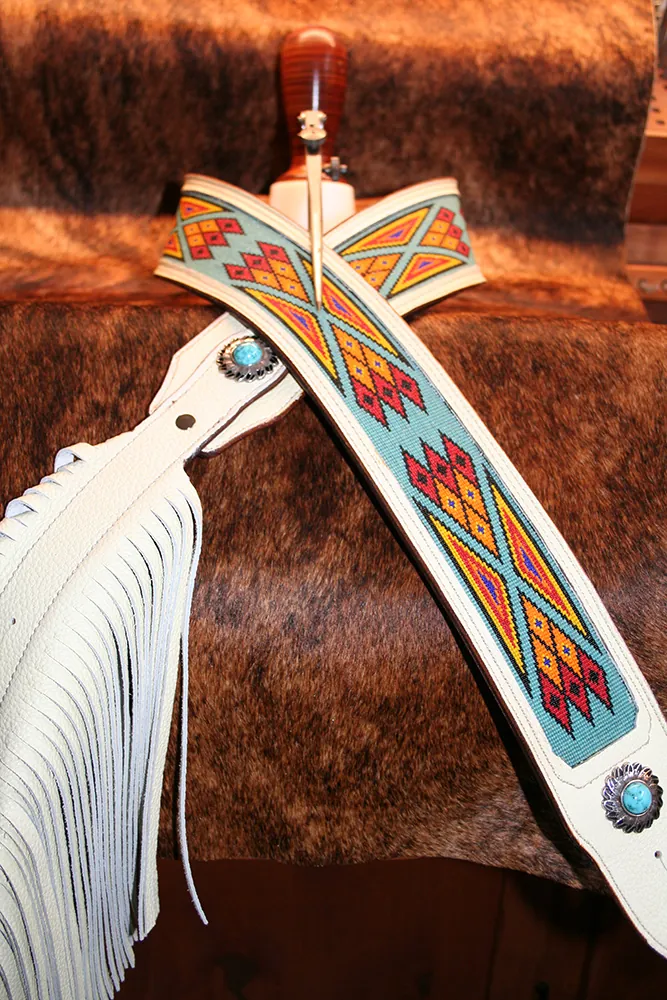
Barb’s beadwork is woven by hand on a loom, then set into the leather as part of the finished design. It brings color and pattern to the strap without turning the piece into a generic accessory.
Choose from dark brown, brown, black, or natural leather, then shape the look with the construction and decorative elements that suit the guitar. A simple leather strap and a concho-detailed, beaded piece can begin from the same craft and end in very different places.
A useful starting point
A custom guitar strap does not need a finished design before the first conversation. It helps to begin with the things you already know. What guitar will wear it most often? Is it a heavy electric, a favorite acoustic, or an instrument that moves between home, rehearsal, and the stage? Do you like the guitar to sit high and close, or lower with more room to move? Those choices give the strap its job before the decorative work starts.
From there, think about the visual direction. A hand-tooled border can give a strap a quiet Western character. A beaded inlay can bring in color and pattern. Conchos, turquoise details, and leather color can pick up something already present in the instrument, from the hardware to the finish to the case it travels in. You do not need to match every detail. The strongest pieces usually have one clear idea, then let the leatherwork support it.
The current guitar strap collection is a practical place to browse examples. Look for a shoulder shape, leather color, or beadwork style that feels close to your taste. A favorite photograph, a view of the guitar, or even a few notes about the colors you wear onstage can all be useful reference points. The goal is not to reproduce someone else’s strap. It is to find the details that belong with yours.
Comfort is not just a soft surface. It is the relationship between the guitar’s weight, the strap’s width, the way the leather sits on your shoulder, and the position where you hold the instrument. A strap that works well for a light guitar may feel very different under a heavier one. That is why starting with the actual instrument is more useful than beginning with a decorative pattern.
Lining and padding are choices worth discussing when the guitar spends long stretches on your shoulder. A padded build can add a more cushioned feel through the shoulder section, while a non-padded strap keeps a more direct leather profile. Fixed and adjustable fittings make a similar difference. One is tailored to a consistent playing height, while the other gives you range when you switch guitars or positions. Neither is automatically better. The right choice is the one that suits the way you play.
The most helpful custom-order notes are simple: the guitar model or a photo, your preferred playing height, whether you want fixed or adjustable fittings, and any ideas about leather color or design. If you have worn a strap that felt too short, too narrow, or uncomfortable after a set, say so. That is useful information, not a small detail.
There is no need to know every construction term before you reach out. The point of a custom order is to shape the piece around the player rather than ask the player to settle for a stock option. Start with what you know, then use the conversation to work through the rest.
More than a stage accessory
A good guitar strap is in every rehearsal photo, every stage shot, and every moment the instrument comes out of its case. It needs to carry its share of the guitar’s weight, feel right against the shoulder, and look considered from the front row or across the room.
That is why the construction matters as much as the design. Southwest Distinctions uses Hermann Oak leather, then builds the strap as a finished piece of leatherwork rather than treating it as a disposable add-on. The current collection includes hand-tooled, beaded, lined, and padded examples to help you see how those choices work together.
For a closer look at the material and decisions behind a handmade strap, read the leather guitar strap guide. When you are ready to move from inspiration to a piece for your own instrument, the custom order is the direct next step.
Start a custom order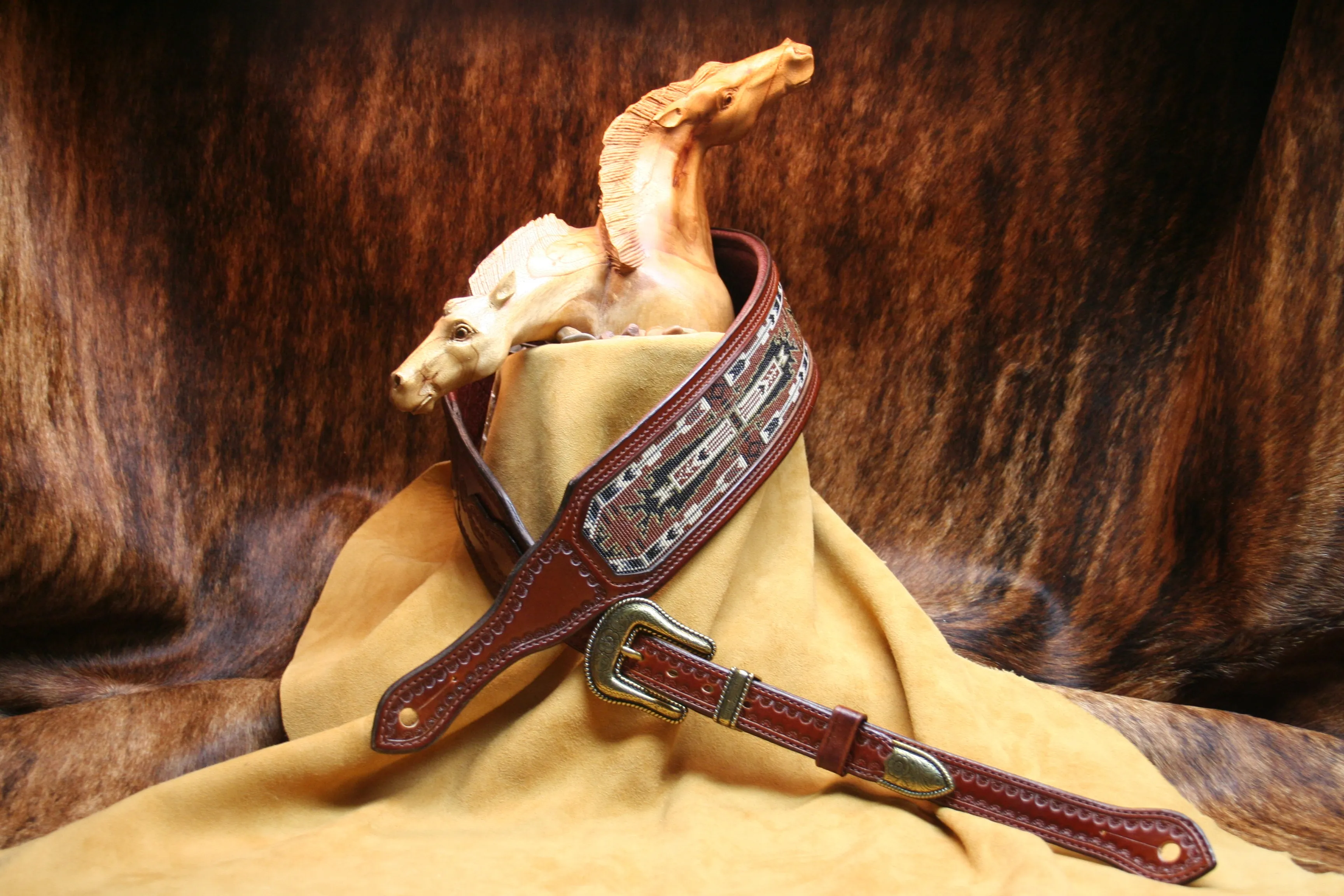
See the work
Frequently asked questions
Yes. A custom piece can be planned around the height where you play, whether you prefer a fixed length or an adjustable fitting. Measuring the guitar while you are standing at your usual playing height gives the clearest starting point.
Southwest Distinctions guitar straps are available with fixed or adjustable fittings, padded or non-padded construction, and leather in dark brown, brown, black, or natural. The collection also shows options such as stamped leather, hand-beaded inlays, turquoise details, and conchos.
Comfort begins with choosing the strap around the guitar and the player. A broader, lined, or padded shoulder section can be a sensible option for a heavier instrument, while a lighter guitar may call for a simpler build.
Start by sharing the guitar, your preferred playing height, and any design ideas through the custom order page. A photo of the guitar and a few notes about the look you have in mind make the conversation more useful from the beginning.
Your guitar, your strap
Start with the guitar, the way you play it, and the details you want to carry with you.