Made in Gold Canyon, Arizona

Leather Acoustic Guitar Straps Made to Order

Southwest Distinctions makes leather acoustic guitar straps around the guitar you play, the way it attaches, and the height where it feels like part of you. The result is a hand-finished strap with a practical job and a character of its own.

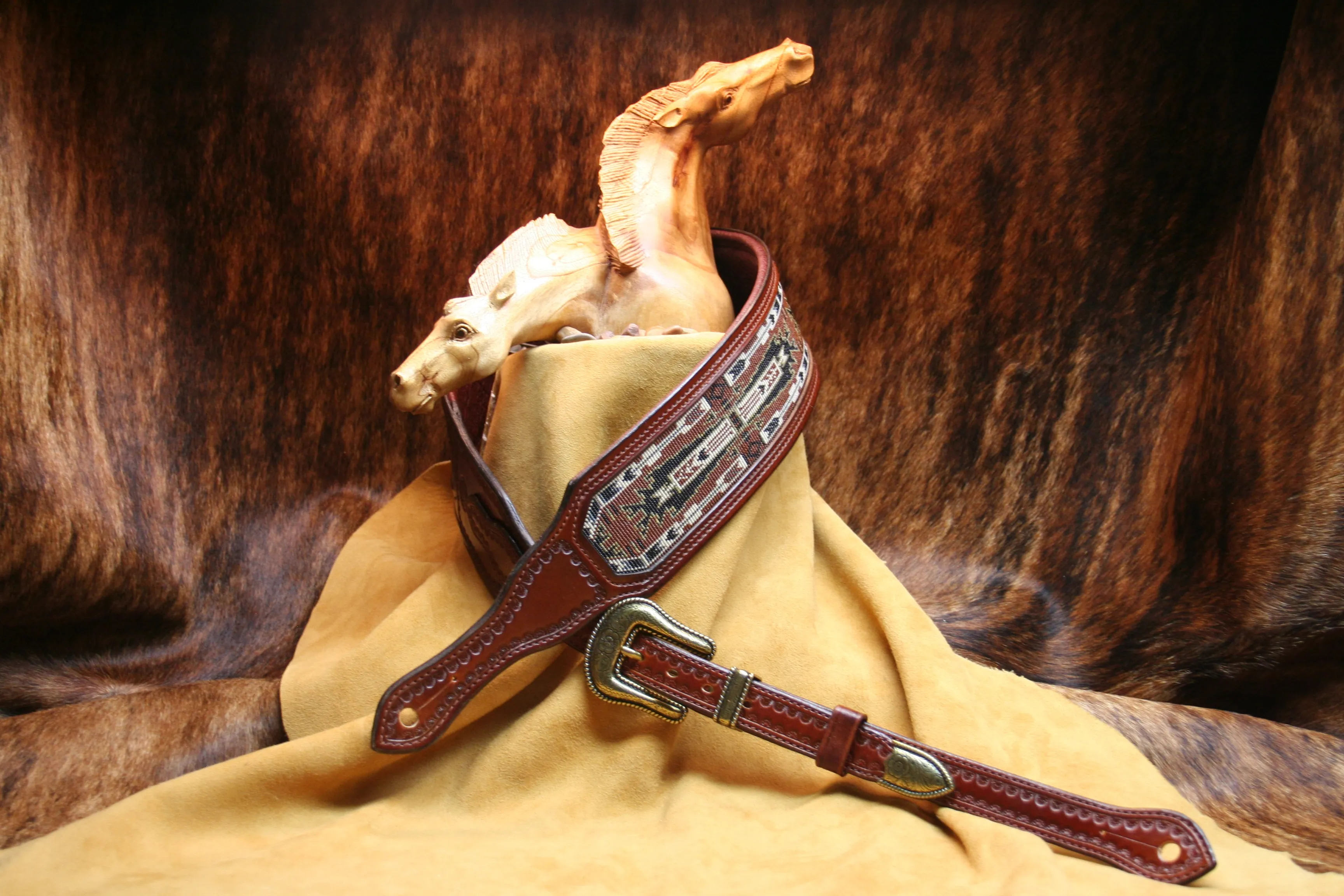
Handmade leather guitar strap with a hand-beaded inlay

Made for the instrument

An acoustic asks a strap to do a little more.

An acoustic guitar has its own balance, body depth, and attachment details. A strap that works beautifully on a solidbody electric may not sit the same way on a dreadnought, a small-bodied fingerstyle guitar, or an acoustic that only has one strap button. The useful choice starts with those facts, before leather color or decoration enters the picture.

Don and Barb Mohr make every strap by hand in Gold Canyon, Arizona. Don cuts, shapes, lines, and finishes Hermann Oak leather. Barb creates loom-woven beadwork one bead at a time when a design calls for it. Together, they make room for an acoustic strap that carries the guitar securely, rests naturally on the shoulder, and feels considered every time the case opens.

Handmade leather guitar strap with a wide shoulder section and beadwork

Start with a secure connection

Let the guitar’s attachment guide the build.

Before a strap is made, look closely at the acoustic itself. A two-button guitar can often use a standard leather strap with properly seated ends. An acoustic with one endpin needs a deliberate neck-end solution that suits that instrument. A photograph of the guitar and its attachment points gives the first custom conversation something real to work from.

Do not force a leather end over a button that does not suit it, and do not modify a valuable guitar simply to make a strap fit. If you are thinking about adding a second strap button, the guitar maker or a qualified repair professional is the right place to confirm what is appropriate for its construction. A careful attachment makes the rest of the decision easier.

Once the connection is settled, the strap can be built around how the guitar hangs, how often you stand to play, and whether one instrument or several will use it. The point is a setup you trust before you ask the leatherwork to make a visual statement.

The choices that matter

Support that makes room for the music.

Playing height

Put the acoustic on and play a familiar chord progression before choosing a fixed length. The right height lets your shoulders settle, keeps the neck reachable, and makes standing feel familiar rather than like a different instrument. A measurement taken while the guitar is on your body is more useful than a strap laid across a table.

Width and padding

Width spreads weight over more of the shoulder. Padding changes the feel where that weight rests. A light acoustic for short sessions may feel best with a clean leather profile. A larger guitar, long rehearsal, or standing set may benefit from a broader or padded shoulder section. They are separate choices, and both should follow the way you actually play.

Fixed or adjustable fittings

A fixed-length strap can feel direct and settled when one guitar always hangs at the same height. Adjustable fittings make sense when you share a strap between instruments, move between sitting and standing, or are still learning the height that helps your hands work naturally.

Leather and handwork

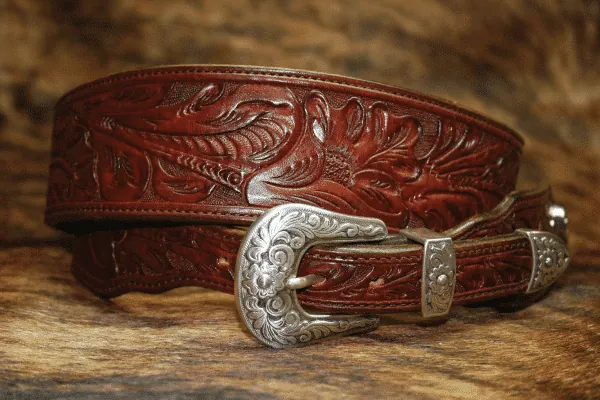
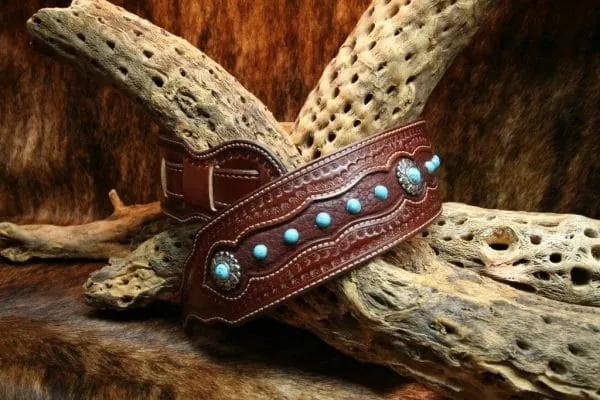
Hermann Oak leather gives the strap a substantial foundation for regular use. Brown, dark brown, natural, and black leather each bring out something different in an acoustic’s wood and finish. Hand tooling, a restrained beaded inlay, turquoise detail, or conchos can add personality once the strap already does its working job well.

Choose around your routine

The best fit is found while you are playing.

Try the guitar in the places where you really use it. Stand and play a few familiar songs. Reach for the higher frets. If you sing while playing, notice whether the guitar sits naturally when you take a full breath. Then sit down with it. The guitar does not need to land in exactly the same position in both situations, but it should remain easy to control without the strap pulling, bunching, or putting a hard edge where you feel it.

Pay attention to the details that emerge after a few minutes, not only the first try-on. Does the outside shoulder begin to feel a narrow pressure point? Does the body drift farther from you than you want? Does the neck-end attachment twist when you sit? Those observations are more useful than a general sense that a guitar feels heavy. They help determine whether a different width, a padded section, an adjustable fitting, or a new playing height will serve you better.

The existing acoustic guitar strap guide walks through attachment, fit, and comfort in more detail. When you are ready to make the strap personal, bring a photo of the guitar, notes about your normal playing position, and any color or leatherwork direction that keeps drawing your eye. You do not need a finished design to begin.

Give the guitar a strap that belongs with it.

An acoustic often carries plenty of character on its own. Spruce, mahogany, rosewood, maple, sunburst, binding, and pickguard all have a presence. A leather strap does not need to match every color exactly. It needs to look like it belongs beside the guitar without competing with the instrument you came to play.

Natural and brown leather can bring warmth to a wood finish. Dark leather can give a lighter-top guitar a stronger frame. A stamped border or a narrow loom-woven panel can add texture without taking over. If the guitar is visually simple, a more detailed shoulder section may be just the right counterpoint. If it has ornate inlay or strong figure, quieter leatherwork can let both pieces breathe.

Build for the hours no one photographs.

A handmade acoustic strap earns its place during a rehearsal that runs long, a song circle, a recording session, or a set where the guitar stays on your shoulder from the first note to the last. That is where the difference between a pretty accessory and a well-considered strap becomes clear.

Southwest Distinctions brings the instrument, the player, and the handwork into the same conversation. Start with the attachment, fit, and support. Then decide how much color, tooling, or beadwork will make the strap feel like yours. The order matters because a strap that feels right is the one you will keep reaching for.

See the craftsmanship

Made around your acoustic, then finished with your point of view.

Every Southwest Distinctions strap begins with hand-finished leather and the practical details that help it work with the guitar. From there, beadwork, tooling, color, and hardware can turn it into something worth keeping close.

Browse the finished work for a starting point, then begin a custom order with a photograph of your acoustic and a few notes about how you play.

Start a custom order
Detailed hand-beaded inlay set into a leather guitar strap

See the finished work

Handmade leather guitar straps from the collection.

View all guitar straps

Frequently asked questions

Leather acoustic guitar strap questions.

Can you make a leather strap for my acoustic guitar?

Yes. Southwest Distinctions makes leather guitar straps around the instrument and the player. A photo of your acoustic, its strap-button setup, and the height where you like to play provide a useful start.

What if my acoustic has only one strap button?

That detail matters at the start. The neck-end attachment needs to suit the specific guitar. Do not modify a valuable instrument just to fit a strap. If you are considering another button, follow the guitar maker’s guidance or ask a qualified repair professional.

Should I choose padding for an acoustic guitar strap?

Padding can be useful for a larger-bodied acoustic, a pickup-equipped instrument, long standing sets, or a shoulder that develops a pressure point. A lighter guitar or shorter session may feel best with a simpler leather shoulder section.

Can my acoustic strap be adjustable?

Yes. Fixed and adjustable fittings are available. An adjustable build can be useful when you change guitars, move between sitting and standing, or are still finding the playing height that feels natural.

Your guitar, your fit

Bring the acoustic and the way you play.

A few real details are enough to begin a strap made around your instrument.

Start a custom order