

An acoustic guitar strap has a simple job: hold the instrument at a useful height without making you think about it. The right leather strap feels settled against the shoulder, connects securely to the guitar, and looks like it belongs with the wood and finish. The wrong one can turn a good guitar into something you keep readjusting between songs.
Acoustic players have a few decisions that electric players can sometimes skip. Some acoustics have two strap buttons. Others have one endpin and need a deliberate neck-end attachment. Body size, standing time, and the playing position you use for chords or fingerstyle all influence the best fit. This guide keeps the choice practical, then leaves room for the leatherwork that makes a handmade strap personal.
Begin with the attachment your acoustic actually has
Before comparing leather colors or shoulder width, look at the guitar. A two-button acoustic can usually take a standard strap with compatible leather ends. The ends should lie flat, sit fully under the button heads, and feel snug without needing to be forced. Check them before every longer session, especially if you move the strap between guitars with different button shapes.
An acoustic with only an endpin needs a purpose-built solution at the neck end. D'Addario, for example, makes an acoustic quick-release strap specifically for a single-endpin setup, which is a useful reminder that attachment style is part of the purchase, not an afterthought. Its acoustic strap range shows the difference between standard two-button straps and products designed for that one-button situation.
Do not drill, modify, or improvise around a valuable acoustic just to make a strap fit. Guitar makers place buttons with the instrument's construction in mind. Collings advises owners to follow its placement guidance for strap-button installation because the neck's internal design matters. Its repair guidance is good common sense: if you are considering a second button, confirm what is appropriate for that guitar with its maker or a qualified repair professional.
Set the playing height before you judge comfort
A strap can be beautifully made and still feel wrong if the guitar hangs too high or too low. Put the acoustic on in the position where you normally play standing up. Strum a familiar progression, reach for a higher-neck passage, and notice whether either wrist is forced into an awkward angle. Your shoulder should not have to lift just to bring the guitar into reach.
Acoustics often sit differently from solidbody electrics because their bodies are deeper and their neck-end attachment can fall in a different place. That is why the measurement that matters is made with the guitar on your body, not with a strap stretched out on a table. The Journal's guide to adjusting a leather guitar strap walks through a useful fitting test before you settle on fixed or adjustable length.
Give the test more than a minute. A position that feels fine while you are standing still can reveal a shoulder strain or a difficult fret-hand angle after a few songs. The best height is the one that lets you stop compensating and play naturally.

Match the shoulder section to the guitar and your playing time
Not every acoustic needs the same amount of shoulder support. A small-bodied guitar used for a short home session may feel great on a clean, slimmer leather strap. A large dreadnought, a heavier pickup-equipped acoustic, or a guitar you wear through a long set may call for more surface area where the strap meets your shoulder.
Width spreads the guitar's weight across more of the shoulder. Padding changes the feel where that weight rests. They are related, but they are not the same decision. Start with width if the strap seems to create a narrow pressure point. Consider padding when the overall weight is manageable but the contact still feels hard after a little time playing. The guitar strap width guide and padded strap guide can help you separate those two choices.
Leather also needs a short period of honest use. A new strap may feel firmer than one that has been played for years, but it should never be so stiff, narrow, or poorly shaped that it distracts from the guitar. A useful strap becomes familiar. You notice the music, not the edge pressing into your shoulder.
Choose leather that works with the guitar's character
Acoustics bring plenty of visual character on their own: spruce, mahogany, rosewood, maple, sunburst, binding, and pickguard all have a say. A leather strap does not need to match every color exactly. It needs a relationship with the instrument that feels considered.
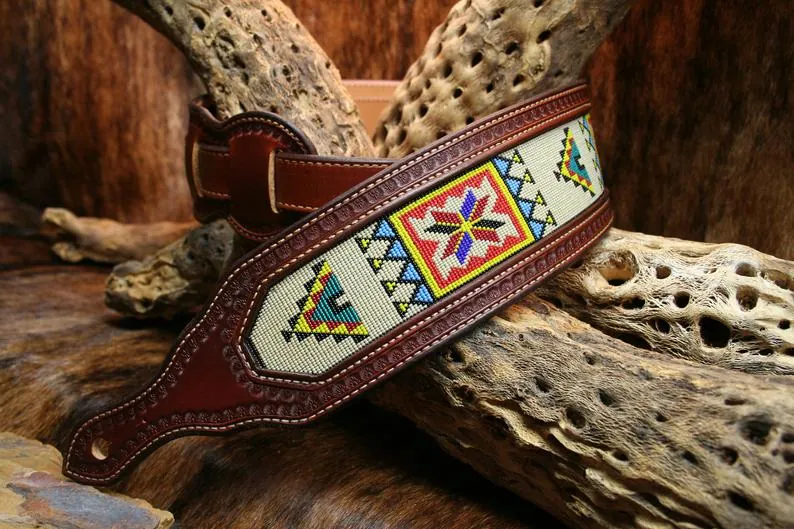
Natural, brown, and dark leather can bring out the warmth of a wood finish without competing for attention. A hand-tooled border or a restrained beaded inlay can add texture while leaving the guitar as the main visual note. If the acoustic is simple, a more detailed strap may be exactly what gives it stage presence. If the guitar already has strong figure or ornate inlay, quieter leatherwork often lets both pieces breathe.
Bring a clear photo of the guitar into a custom conversation. It makes it much easier to judge leather color, hardware tone, pattern scale, and whether a decorated shoulder section will sit where it can actually be seen while you play.

Look closely at the leather ends and adjustment
Secure ends matter more than any decoration. The leather around each button hole should remain substantial, with no cracking, stretching, or split beginning at the opening. Put the strap on and give each connection a gentle check before playing. You are not testing it to failure, you are making sure it is fully seated and predictable.
Next, consider the adjustment. A fixed-length strap is clean and dependable when one guitar always hangs at the same height. An adjustable leather tail or buckle is useful when you share a strap between instruments, sit and stand often, or are still learning what height suits you. The adjustment should land away from the shoulder's main pressure point and should not leave a loose end that catches on clothing or case hardware.
Strap locks can be helpful for active stage movement, but they do not replace sound leather ends or maintained buttons. The guitar strap hardware guide covers the small checks that keep the working parts from surprising you at rehearsal or on stage.
Use a real playing test, not a quick try-on
The most useful comparison happens with the acoustic in the place where you really use it. Put on the strap, set the length, play through chords, fingerstyle work, and the upper-neck passages that make you move. If you sit as well as stand, make that transition too. A strap that feels right in one position but twists or shifts in another needs a closer look.
Watch for four things. First, pressure: does an edge create a hot spot after ten minutes? Second, stability: does the guitar stay in the position you chose? Third, attachment: do both ends remain properly seated? Finally, movement: can you breathe, reach, and turn without the strap bunching or the guitar drifting away from you?
Write down what you learn. “The guitar feels heavy” is less useful than “the outside shoulder starts to ache after three songs” or “the neck end twists when I sit.” Those details give a maker a sound starting point for width, padding, length, and hardware placement.
Care for the strap where it meets the guitar
A leather strap does not need elaborate treatment, but it does benefit from ordinary attention. Before a rehearsal, check the two attachment points, the adjustment, and the leather around the button holes. After a long practice session or travel day, brush away obvious dust with a clean dry cloth and make sure the strap has not been packed sharply around a cable, tuner, or case latch.
Moisture is worth taking seriously. If the strap gets wet on the walk into a venue or during an outdoor set, let it dry naturally in a well-ventilated place. Direct heat can make leather dry unevenly or stiffen it. Do not rush to apply conditioner to a strap simply because it saw a little rain. Let it return to normal first, then follow the maker's care guidance for the specific leather and any decorative inlay.
For an acoustic with a headstock attachment, include the tie or adapter in that quick check. It should be secure without rubbing against strings, hardware, or finish. For a two-button setup, make sure the strap ends have not been stretched by an oversized button or a locking system that does not suit the leather. A secure connection is quieter, safer, and easier on a guitar you intend to keep for years.
Store the strap in a loose curve instead of a hard crease. Leather gains character with use, and that is part of its appeal. The goal is not to keep it untouched. The goal is to let the marks come from playing music, not from avoidable stress in a crowded case or an improvised attachment.
Use the strap to make standing and sitting feel familiar
Many acoustic players move between a chair, a music stand, a rehearsal room, and a stage. A strap that works only in one of those situations can make the transition feel clumsy. Once you have chosen a secure attachment and a useful standing height, sit with the guitar as you normally would and see what changes. The body may settle differently against you, and the neck-end connection may rotate slightly.
You are looking for consistency rather than identical geometry. The guitar does not have to land in exactly the same place when sitting, but it should remain controllable without the strap pulling across the shoulder, bunching under the arm, or placing a buckle where it becomes distracting. An adjustable build gives room to experiment. A fixed-length build is best once you have already found the height that keeps both positions comfortable.
This is especially useful for players who fingerpick, sing while playing, or use a capo often. Those styles can expose a small reach problem quickly because your attention needs to stay on timing and touch. A well-fitted strap lets you make the change from seated practice to standing performance without relearning where the guitar belongs.
Build the strap around the way you use the acoustic
Southwest Distinctions starts with the guitar and the player. The useful details come first: the instrument, normal playing height, whether you sit or stand, how long you play, and the way the strap will attach. From there, the leather can be shaped around the support you need, with fixed or adjustable length and a shoulder section that belongs with the work.
Then the personal elements have room to matter. Hand tooling, a loom-woven beaded inlay, turquoise details, conchos, lining, and leather color can all support the character of the instrument without losing the working purpose of the strap. Browse the guitar strap collection, then use the custom leather guitar straps page to see the choices worth settling before a made-to-order piece begins.
Made around your acoustic
Set the attachment and fit first. Make the leatherwork yours from there.
Explore handmade leather guitar straps, or begin a custom order with a photo of your acoustic and a few notes about the way you play.
Questions about leather acoustic guitar straps
Can I use any leather strap on an acoustic guitar?
Many acoustics work well with a standard leather strap when they have two compatible strap buttons. Check that the leather ends seat fully and securely. A one-button acoustic needs an attachment method that suits that particular instrument.
Do acoustic guitars need a wider strap?
Not always. A light acoustic can feel natural on a slimmer strap, while a larger body, a long standing set, or a shoulder hot spot can make extra width or padding worthwhile. Let the guitar and your playing time decide.
Should I install a second strap button on my acoustic guitar?
That is an instrument decision, not a strap decision. Check the guitar maker’s guidance or ask a qualified repair professional before modifying a valuable instrument, because internal construction and suitable placement vary.
How do I choose the right length for an acoustic guitar strap?
Put the guitar on with a secure attachment, then set the height where your hands and shoulders feel natural while standing. Test familiar chords and higher-neck work before committing to a fixed-length strap.
Related posts
Guitar Culture
How to Adjust a Leather Guitar Strap
A practical way to set the right length, playing height, and comfort for a leather guitar strap.
Read the guide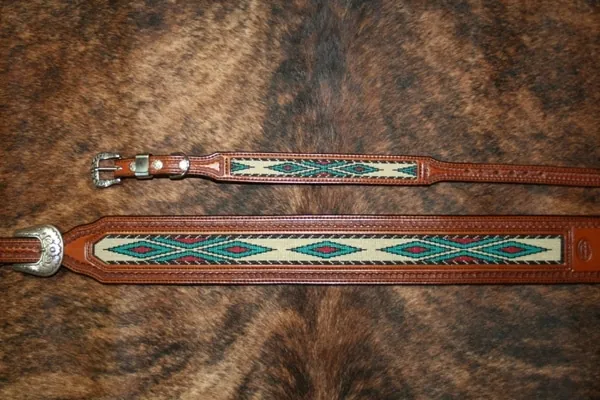
Guitar Culture
Guitar Strap Width: How to Choose the Right Fit
A practical guide to choosing guitar strap width for your instrument, playing time, comfort, and personal style.
Read the guide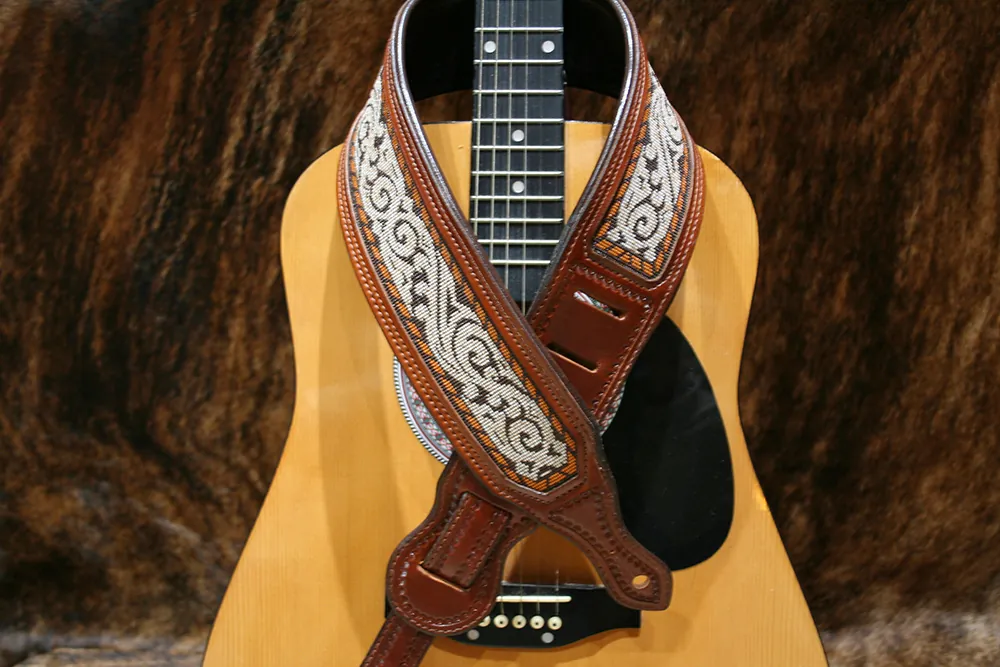
Guitar Culture
Padded Leather Guitar Straps: How to Choose One
A practical guide to choosing a padded leather guitar strap for the right width, length, support, and playing comfort.
Read the guide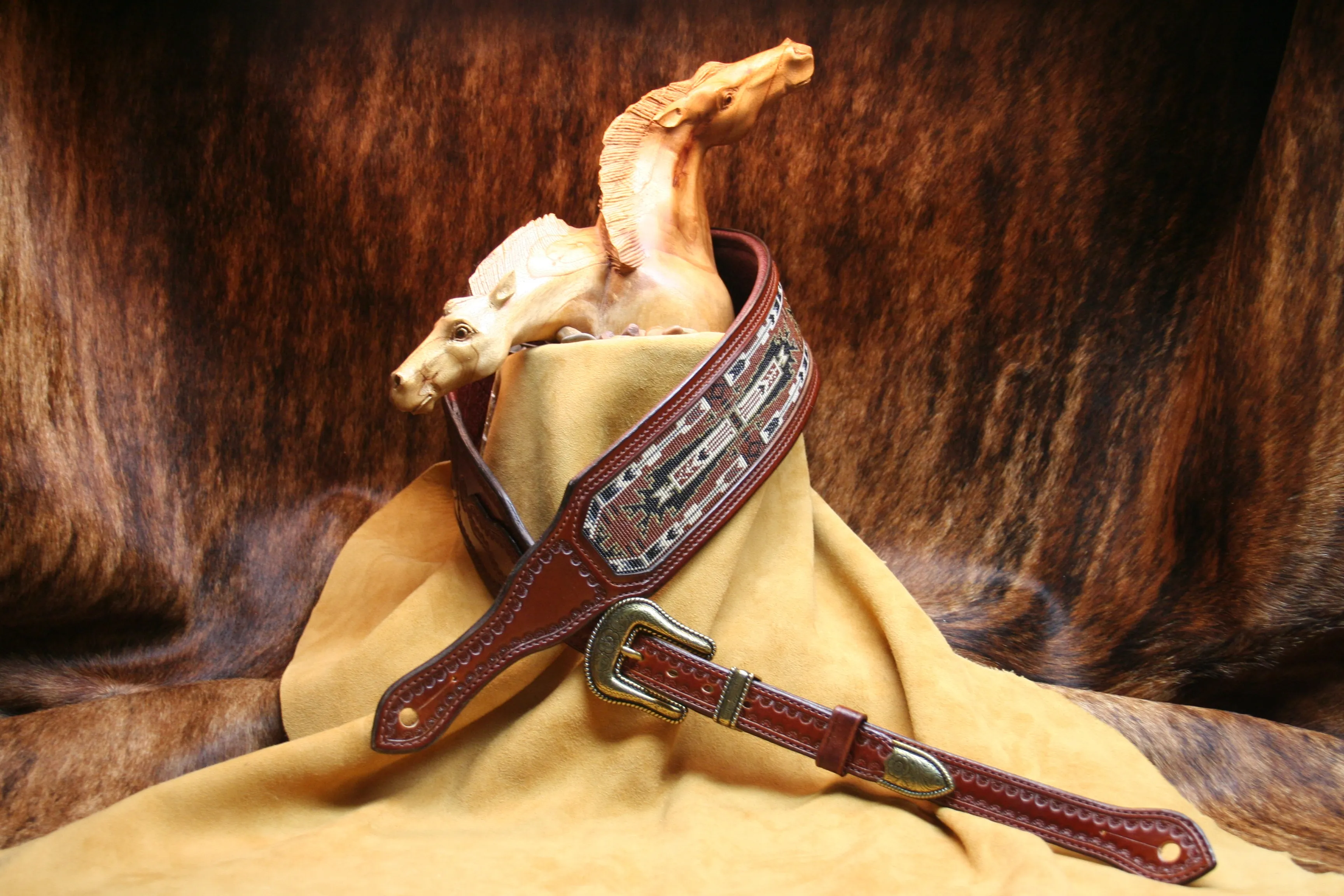
Guitar Culture
Guitar Strap Hardware: What Holds the Fit Together
A practical guide to guitar strap hardware, from leather ends and adjustment fittings to secure everyday checks.
Read the guide