
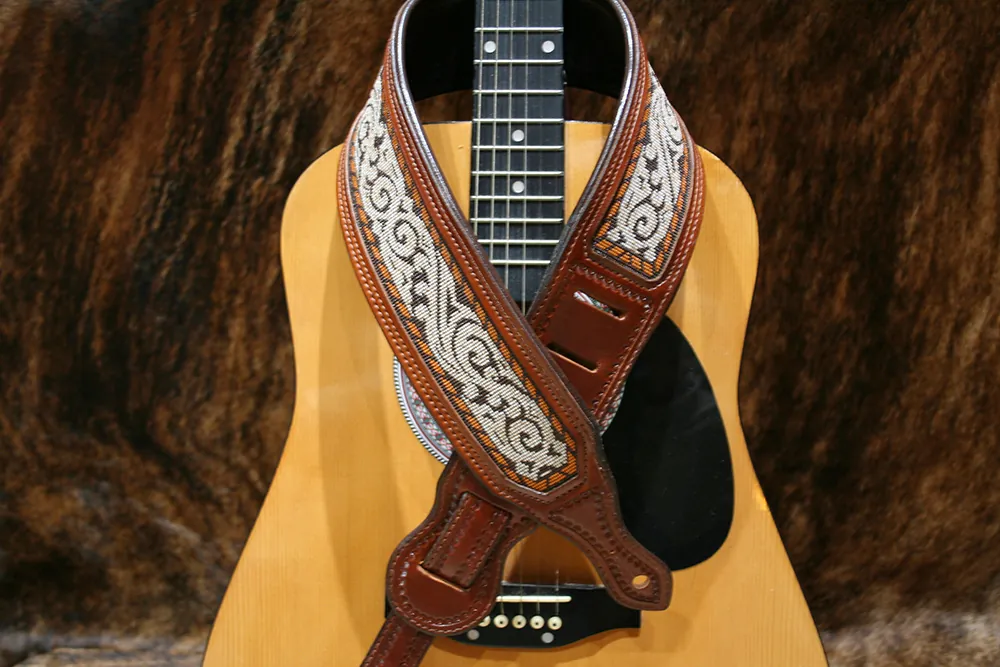
A padded leather guitar strap can make a heavy instrument feel much easier to live with, but padding is not the whole answer. The right strap has to put the guitar at a useful height, spread its weight across your shoulder, stay secure at both ends, and feel good after the first few minutes are over.
That is why a player can buy a soft strap and still come away disappointed. It may be too narrow, too short, too long, or shaped in a way that puts a buckle where it rubs. A good padded strap is a system of choices, not just a layer of foam. Use this guide to decide what matters for your guitar and the way you actually play it.
Start with the guitar and the time you spend wearing it
First, think about the instrument instead of the strap. A light hollowbody, an acoustic played for a few songs, and a heavy solidbody used through a three-hour rehearsal do not make the same demands. The more weight you carry and the longer you carry it, the more useful a broad, supportive shoulder section becomes.
That is the practical case for padding. Taylor groups padded leather straps with options designed to improve comfort during longer playing sessions, while Henry Heller's 3.5-inch padded leather example uses a foam layer between leather surfaces for players using a heavier instrument. Those are useful examples of the design logic, not a rule that every guitar needs the same build. Taylor's strap overview and Henry Heller's padded leather strap both make the point clearly: comfort begins with the job the strap needs to do.
Try a simple test before you shop. Put your guitar on with the strap you already own, stand normally, and play for ten minutes. Notice where discomfort starts. If a narrow edge presses into one spot on your shoulder, width and padding may both help. If the guitar hangs at a bad height, solve length first. If the guitar swings away from your body, the answer may be fit or surface grip instead of extra cushioning.

Width does more of the heavy lifting than softness
Padding cushions your shoulder. Width spreads the load. They work together, but they are not interchangeable. A thick padded strip can still concentrate the guitar's weight if it is narrow. A broad unpadded strap can feel better than expected if the instrument is light and the shape sits cleanly across the shoulder.
A useful starting point is to compare the strap's shoulder section with the weight of the guitar. For a lighter acoustic or electric, a slimmer strap may feel natural and less bulky. For a heavy guitar, bass, or long set, a wider shoulder section usually gives the weight more room to spread out. Treat any advertised width as a starting point rather than a prescription, because body shape, playing position, and strap construction change the result.
Look at where the extra width sits. A well-shaped shoulder section can be broad where the strap bears on you, then taper toward the strap buttons so it does not feel clumsy near the guitar. That lets the part doing the work stay supportive without making the full strap unnecessarily bulky.
Southwest Distinctions straps are made in different widths and can be lined and padded. The guitar strap collection shows the range of tooled, beaded, and leather-forward designs, but the right place to begin is still the instrument on your own shoulder.
Set the length before you decide that the strap is comfortable
Length controls where the guitar hangs. Padding cannot correct a guitar that is too low for your fretting hand, too high for your picking shoulder, or so far from your body that you are holding it in place. Find your playing height first, then decide how much cushion and width you need at that height.
For most players, the useful test is simple. Stand with the guitar where you normally play, run through open chords, a high-neck passage, and a few minutes of the songs you know best. Your wrists should not be forced into a sharp bend, and your shoulder should not be rising to reach the guitar. The Journal's guide to adjusting a leather guitar strap walks through that test in detail.
Adjustment range matters because a strap that feels perfect in a shop can run out of length at home. Pardo's current length guide places many standard adjustable straps around 55 to 60 inches at full extension, while longer straps can reach about 70 inches. That does not tell you what your body needs, but it does explain why a player who prefers a lower position or needs extra reach should check the actual range before buying. Read the length comparison for a clear visual reference.
If you wear one guitar high and another low, an adjustable strap may serve you better than a fixed length. If one instrument has one permanent home on your body, a fixed-length custom strap can remove excess hardware and keep the decorative shoulder section exactly where you want it.

Check the padding design, lining, and hardware placement
Not all padding feels the same. Some designs use a distinct padded shoulder panel. Others build a layered leather strap with cushioning inside. Neither approach is automatically better. What matters is whether the padding stays where the shoulder needs it and whether the layers feel stable instead of squishy or lumpy.
For a handmade leather strap, look at the relationship between the face leather, lining, and padding. The face leather is where tooling, beadwork, color, and character live. The lining is the finished layer against the shoulder. Padding sits between them when the build calls for more cushion. A lined construction can feel more finished than raw suede against clothing, while a padded build adds another level of support for players who need it.
Then look at the hardware. A buckle, adjustment tail, or strap lock should work without landing directly on your shoulder or scraping the guitar. When a strap has a beaded or tooled center section, the hardware should also leave that work centered where it can be seen. These are small details until you wear the strap for an hour, then they become the whole point.
Do not confuse a padded strap with a security system. Check that the leather ends fit fully around the strap buttons and that the holes are not cracked or stretched. Strap locks can add assurance when they are installed and used correctly, but they do not repair worn leather ends or loose hardware. A good buyer's guide from Andertons makes the same distinction between a strap's comfort, durability, and locking options. Their guitar strap guide is a useful second opinion before you choose hardware.
Use a short playing test to compare two good options
When two straps both look promising, do not try to decide by pressing one against your shoulder in a store. Put the guitar on, adjust both straps to the same playing height, and spend a few minutes doing the same familiar movements with each one. Play a chord change near the nut, a passage higher on the neck, a few bends, and the rhythm pattern you use most often. A strap that feels impressive when you first put it on may start to feel restrictive once you settle into your normal posture.
Pay attention to the edges of the shoulder section. They should lie flat instead of folding or digging in. Notice whether the guitar stays close to your body without needing a tighter grip from your fretting hand. Check whether the strap shifts after you move, sit down, or turn your torso. The best choice usually becomes clear when you stop evaluating it and start paying attention to the music instead.
It is also worth testing with the clothing you actually wear. A smooth leather lining may move differently over a T-shirt, a denim jacket, or a stage shirt. A padded strap that feels fine over a thick jacket may feel too broad over a thin shirt. This is not a reason to overthink the purchase. It is simply why a practical playing test is more useful than choosing by a product photo or a single measurement. Take note of the setting that works, so a replacement or custom order starts with a useful answer instead of a guess.
Choose the look after you know the strap's job
A padded leather guitar strap does not have to look like medical equipment. The shoulder support can be part of a clean, simple leather build, or it can sit behind tooling, beadwork, conchos, and a design that belongs with the guitar. The difference is starting with the practical decisions before choosing the decoration.
Think about the instrument's finish, hardware, and the way you use it. A quiet brown tooled strap may be the right counterpoint to a bold guitar. A hand-beaded inlay can pull color from a sunburst, turquoise hardware, or a favorite stage shirt without trying to match every detail. For players who use the same guitar onstage, the strap becomes part of the instrument's visual identity as well as its support system.
The workshop guide, How to Make a Leather Guitar Strap, shows why the material and construction choices matter before the decorative work begins. The story of Western straps and rock is another useful reminder that a leather strap can have real character without giving up its working purpose.

When a custom padded leather strap makes sense
Custom work makes the most sense when stock straps keep getting close but not quite right. Maybe your heavy guitar needs a broader padded shoulder section, but the store options are too short. Maybe you have a comfortable length but want a fixed build with less hardware. Maybe you want beadwork or tooling that fits the guitar without losing the support you need for regular sets.
Southwest Distinctions makes leather guitar straps around the player, guitar, and desired details. Each piece can begin with the practical decisions: fixed or adjustable fit, padded or non-padded construction, leather color, shoulder width, and the kind of tooling or beadwork that belongs with the instrument. The custom leather guitar strap page explains those choices, and the measurement guide gives you a useful starting point before you reach out.
Bring a photo of the guitar, your preferred standing height, and notes about what has not worked with past straps. That is enough to begin. A custom strap does not require you to know every construction term. It requires a clear picture of how you want the guitar to feel when it is on your shoulder.
Built for the way you play
Choose support that belongs with your guitar.
Browse handmade leather guitar straps, or use custom orders to discuss the width, length, padding, and design details that fit your instrument.
Questions about padded leather guitar straps
Are padded leather guitar straps worth it?
They can be a strong choice when an instrument feels tiring during longer rehearsals, recording sessions, or sets. Padding adds cushioning, but the strap still needs the right width, length, and secure ends for the player and guitar.
What width guitar strap is best for a heavy guitar?
There is no universal number, but heavier guitars often feel better on a broader shoulder section than a narrow strap. Try the guitar at your normal standing height and compare how the weight feels after several minutes of playing, not just when you first put it on.
Should I choose a padded or non-padded leather strap?
Choose a padded build when you want more cushion through the shoulder section, especially for a heavier guitar or longer playing time. A non-padded leather strap can suit a lighter guitar, a simpler profile, or a player who prefers a closer feel from the leather.
Can a padded leather guitar strap be made at a custom length?
Yes. A custom strap can be planned around the height where you play. Measure with the guitar on your body at your real standing position, then share that measurement and whether you prefer a fixed or adjustable fitting.
Related posts
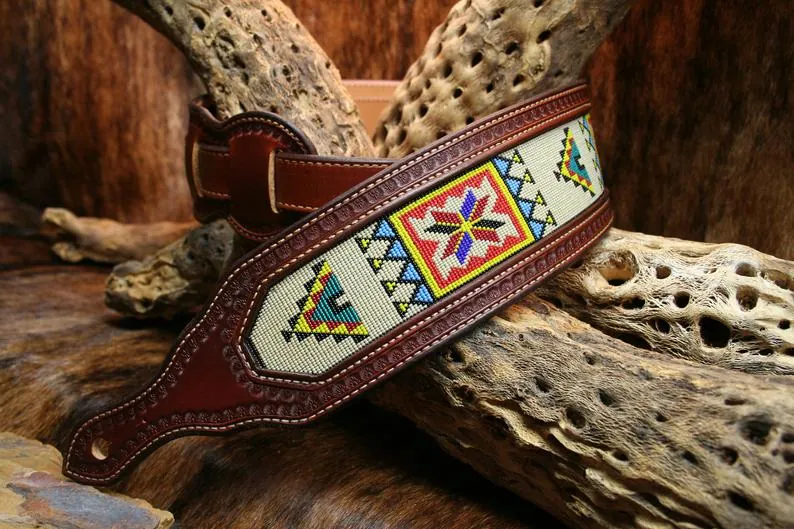
Fit guide
How to Adjust a Leather Guitar Strap
A practical way to set the right length, playing height, and comfort for a leather guitar strap.
Set your fit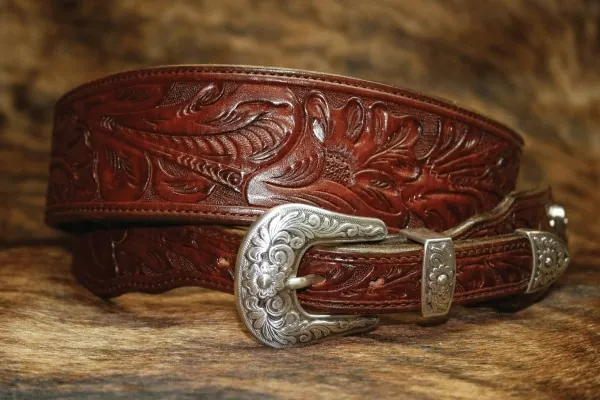
Workshop guide
How to Make a Leather Guitar Strap
A practical guide to the leather, layout, construction, and finishing choices behind a durable handmade guitar strap.
Read the guide