
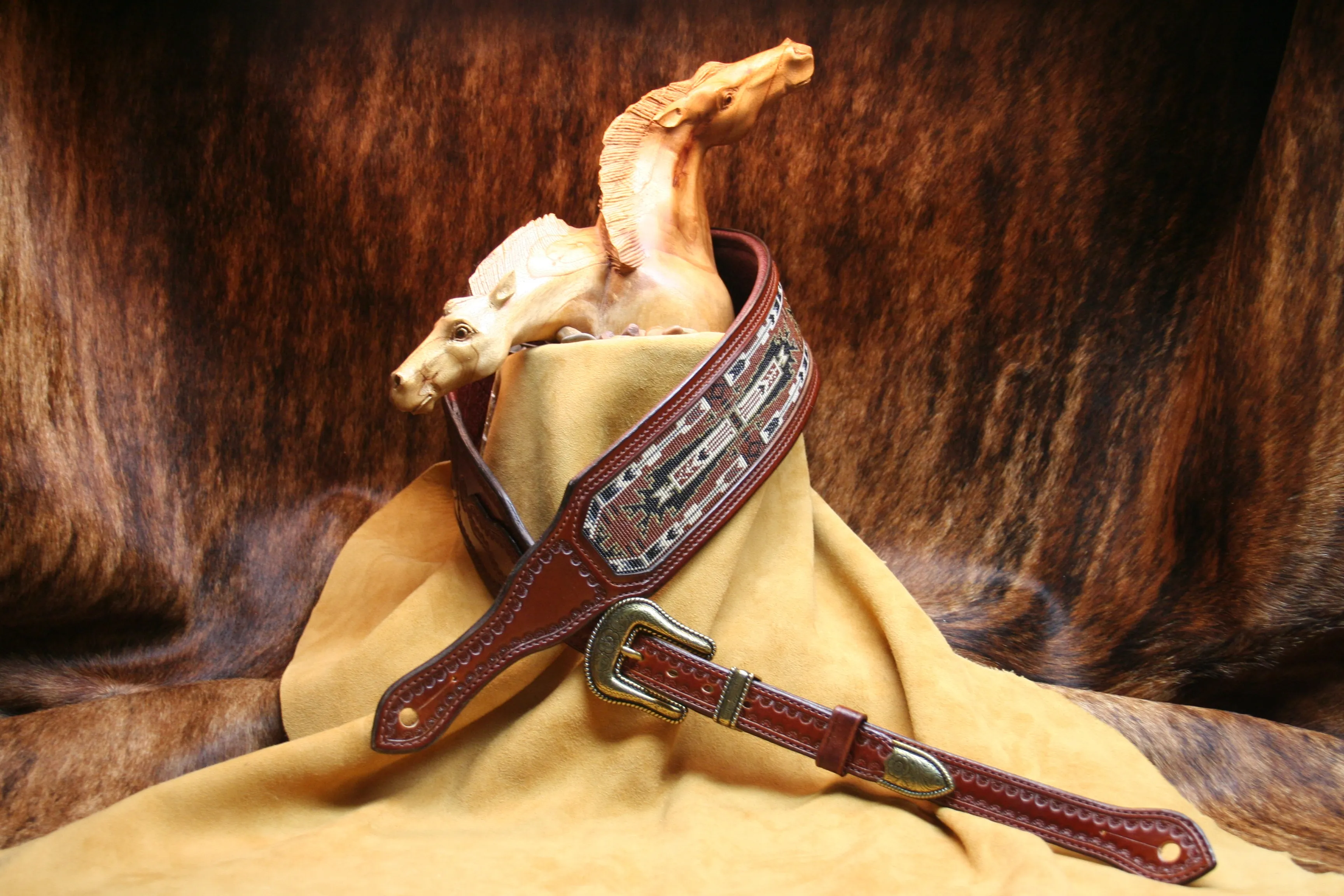
A guitar strap may look simple from the audience, but the small pieces that set its length and hold it to the guitar deserve more attention than they usually get. The leather carries the instrument. The hardware makes the fit usable, keeps the strap settled where you chose it, and gives the decorative work room to sit in the right place.
That does not mean every strap needs a collection of metal parts. A clean fixed-length leather strap can do its job with sound ends and careful sizing. A more adjustable strap may use a buckle or a leather tail. A player who moves hard on stage may add locking hardware. The useful question is not which option looks most impressive. It is which one suits the guitar, the player, and the way the strap will actually be used.
Start with the strap ends, not the decoration
The two leather ends are where the strap meets the guitar. Before considering buckles, conchos, or a beaded inlay, make sure those ends sit fully under the strap-button heads and lie flat against the instrument. A strap end that is cracked, stretched thin, or only partly seated is a problem no decorative detail can solve.
Look at the leather around each button hole after the strap has carried the guitar for a while. It should remain substantial and even, with no split moving out from the hole. When the strap is on the guitar, pull gently downward and side to side. You are not trying to test its breaking point. You are checking that the leather is properly seated and that the strap does not feel loose before you ever put the guitar over your shoulder.
This is especially important when moving a strap between guitars. Strap buttons vary, and a hole that felt snug on one instrument may feel different on another. Do not force leather over a button that is clearly too large, and do not rely on tape, glue, or an improvised knot to make a poor fit seem acceptable. The right answer is a strap end and button combination that engage cleanly.
Choose an adjustment style that matches your routine
Adjustment hardware is really about repeatability. You want to find the height where the guitar feels natural, then return to it without the strap twisting, creeping, or leaving an uncomfortable piece of hardware under your shoulder. A buckle, slider, or leather adjustment tail can all work well when the design gives the fitting enough room to do its job.
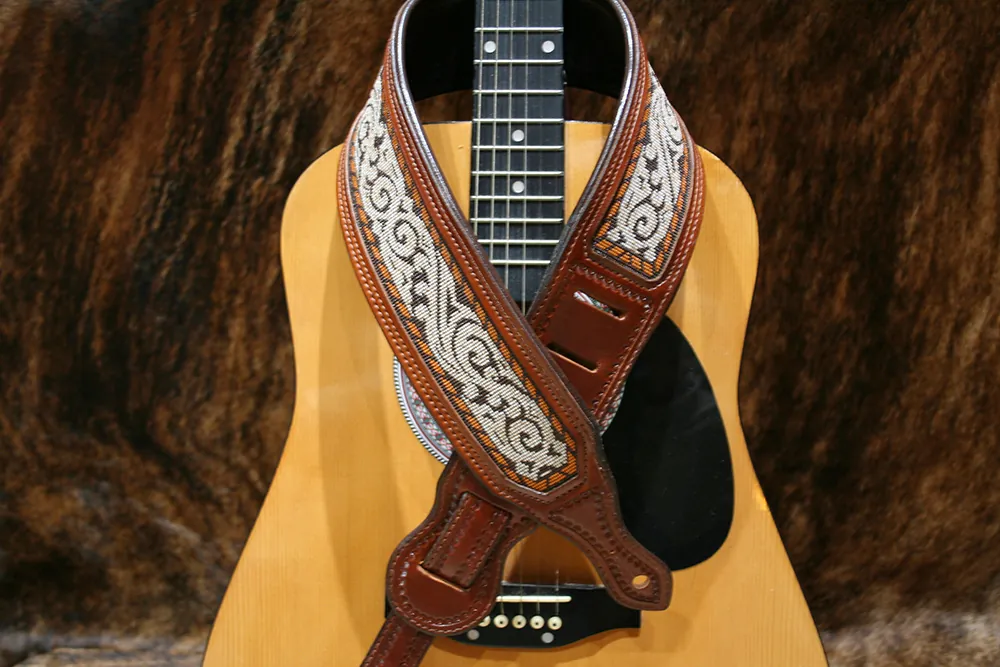
A buckle-adjustable strap gives a traditional leather look and a clear set of usable positions. It can be a strong choice for a player who likes a tailored fit but still needs some range. The buckle should land away from the part of the shoulder that carries the most weight, and the adjustment should lie flat so it does not become the first thing you feel halfway through a set.
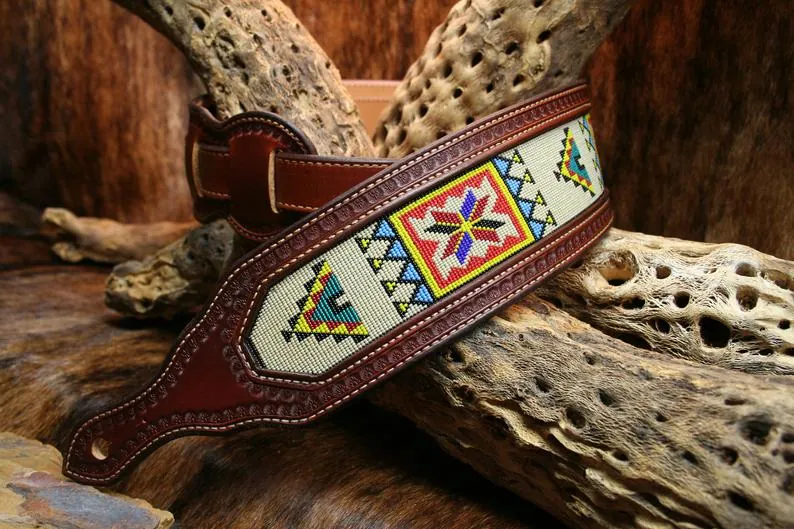
A leather tail adjustment keeps the hardware quieter and can suit a strap with a broad shoulder section, detailed tooling, or beadwork that should remain visually uninterrupted. The tail needs enough length to give a real adjustment range without leaving a loose piece that catches on clothing, a cable, or the edge of a case. Once it is set, check that every slot is fully seated before playing.
A fixed-length strap has no adjustment point to manage, which can be exactly right for a player with one primary guitar and a well-established playing height. Its success depends on measurement. The Journal’s guide to adjusting a leather guitar strap explains how to find that position before committing to a fixed length.
Keep hardware out of the pressure points
Where hardware sits matters as much as which hardware you choose. A heavy buckle directly on top of the shoulder can make a beautiful strap feel awkward. A slider that ends up behind the neck can pull attention away from playing. When a strap is planned well, the adjustment point falls where it can work without becoming a pressure point.
Put the guitar on at your usual height, then move through the things you actually play. Strum standing still, reach for the higher frets, sit down, and bring the guitar into the position you use when rehearsing. Notice whether the buckle or tail shifts into a place that rubs, presses, or catches. Those details are easier to correct at the design stage than after a strap has been decorated and finished.
Weight also changes the answer. A light hollowbody may leave you free to choose a slimmer strap and simple adjustment. A heavier electric can benefit from a wider shoulder section or padding, then hardware placed beyond that supported area. The padded leather guitar strap guide is useful when the main decision is how the strap spreads the guitar’s weight.
Strap locks are a choice, not a substitute for fit
Strap locks add a mechanical connection between the strap and the guitar. They can make sense for a player who moves actively on stage, changes straps often, or simply wants an additional layer of confidence with a valued instrument. They are a separate category from a secure leather end, not a replacement for one.
The options sold by established accessory makers make the point clearly: guitar strap accessories include both lock-style systems and simpler supporting pieces, because players have different needs. Some want a locking mechanism. Others only need a dependable way to keep a standard strap in place. The choice should follow your guitar, playing environment, and comfort with the installation, not a belief that every strap needs the same solution.
When you use locks, keep the installation disciplined. Make sure the guitar-side pieces are properly tightened, the strap-side pieces are fully engaged, and the hardware is rechecked after travel or a long run of playing. A lock cannot rescue a cracked strap end, a loose button, or a strap set to the wrong length. It is one part of a complete setup.
For a custom leather strap, decide on locks early. They affect the size and feel of the leather end, the way the attachment looks, and sometimes where decorative details can sit. Planning that connection from the beginning keeps the finished strap looking intentional rather than modified later with a workaround.
Let the hardware serve the leatherwork
Hardware should support the visual direction of the strap instead of interrupting it. On a plain brown leather strap, a buckle can become part of a clean, traditional silhouette. On a wide hand-tooled strap, it may be better placed where it frames the work rather than cutting through the center. On a beaded inlay, the adjustment should leave the beadwork visible and protected from unnecessary bending.
That is why handmade straps benefit from treating fit and decoration as one conversation. Beadwork, tooling, conchos, and leather color are not added after the carrying structure is solved. They are arranged around the parts that hold the guitar, set its position, and move with the player. The guide to tooled leather guitar straps shows how the decorative work can be planned around the strap’s real working job.
It also helps to be honest about the guitar itself. A dramatic strap can suit a simple black guitar, while a heavily figured or brightly finished instrument may be better with quieter leatherwork. Hardware can reinforce that relationship. A modest buckle or dark fitting lets the guitar lead. A more visible piece can add character when the rest of the setup has room for it.
Check the working parts before they ask for attention
A good strap check takes less than a minute. Before a rehearsal, gig, or long session, look at both leather ends. Confirm the buttons or locks are seated. Check that an adjustment buckle is fully through its hole or that a leather tail is completely engaged in its slot. Then run a hand along the strap to make sure it is not twisted.
After a show or travel day, give the hardware another look before putting the guitar away. Dirt, moisture, and a packed case can all create small issues that are easy to miss in the moment. Wipe obvious dust from the leather with a dry cloth, keep metal fittings dry, and do not store the strap sharply folded around the guitar. The goal is simple: let the strap age from music and use, not from avoidable stress.
If something feels different, stop and inspect it. A strap that suddenly sits lower may have shifted at the adjustment point. A new rattle can point to loose hardware. A button hole that feels easier to put on than it did last month deserves a closer look. A working strap should become familiar, not unpredictable.
Build the right hardware plan around your guitar
Southwest Distinctions builds leather guitar straps around the player and instrument first, then the details that make the piece personal. The choices can stay practical: fixed or adjustable length, a wider or padded shoulder section, the attachment style, and where any buckle or hardware should sit. From there, leather color, hand-tooling, beadwork, turquoise details, and conchos can make the strap feel connected to the guitar it carries.
The guitar strap collection is a good place to see how different builds come together. For a made-to-order piece, the custom leather guitar strap page explains the fitting and design choices that are useful to settle before work begins. You can also use the measurement guide to start with the playing height that feels right to you.
Bring a photo of the guitar, the strap you use now, and a few notes about what you would change. Maybe the current buckle lands in the wrong spot. Maybe you want a fixed length, a better adjustment range, or a more secure attachment. Those are the details that turn hardware from an afterthought into a strap that feels made for the way you play.
Built around your guitar
Set the fit first. Let every detail follow.
Browse handmade leather guitar straps, or use custom orders to discuss the fit, hardware, leatherwork, and details that belong with your instrument.
Questions about guitar strap hardware
What hardware does a guitar strap need?
At its simplest, a guitar strap needs two secure ends that fit the instrument’s strap buttons. An adjustable strap also needs a dependable way to set length, such as a buckle, slider, or leather adjustment tail. Strap locks are an optional extra for players who want a mechanical locking connection.
Are strap locks necessary for a guitar strap?
They are not necessary for every player, but they can be useful for an instrument that sees energetic stage movement or frequent strap changes. They should be installed and checked correctly, and they do not replace sound leather ends, secure buttons, or a strap that fits the guitar properly.
Is a fixed-length or adjustable guitar strap better?
A fixed-length strap can look clean and feel consistent when one guitar is always worn at the same height. An adjustable strap gives more range for players who switch guitars or positions. The better choice is the one that lands the guitar where your hands can work comfortably.
How often should I inspect guitar strap hardware?
Look over the strap ends, adjustment point, and any locks before rehearsals, performances, travel, or a long playing session. A quick check is enough to catch a stretched hole, a partly engaged buckle, or loose hardware before it becomes a problem.
Related posts
Fit guide
How to Adjust a Leather Guitar Strap
A practical way to set the right length, playing height, and comfort for a leather guitar strap.
Set your fitBuyer’s guide
Padded Leather Guitar Straps: How to Choose One
A practical guide to choosing a padded leather guitar strap for the right width, length, support, and playing comfort.
Choose support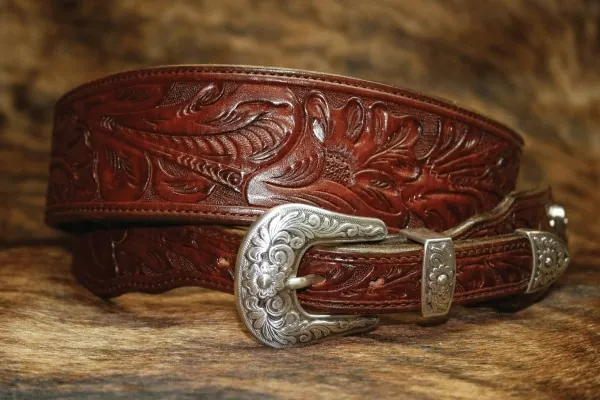
Workshop guide
How to Make a Leather Guitar Strap
A practical guide to the leather, layout, construction, and finishing choices behind a durable handmade guitar strap.
Read the guide