
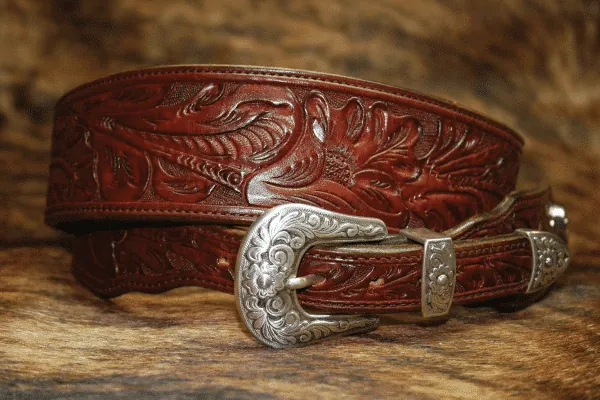
A tooled leather guitar strap can make a guitar feel more personal before a note is played. The pattern catches the light, gives the leather depth, and brings a handmade character that a flat strap cannot imitate. But the best strap still has to do its working job: hold the guitar securely, sit at the right height, and stay comfortable through the time you actually spend playing.
That balance is what separates a strap you admire from one you reach for. The tooling should suit the guitar and the player, while the leather, width, lining, and hardware should suit the weight of the instrument and the way it is worn. This guide walks through the details worth checking before you choose a tooled leather guitar strap or plan a custom one.
What "tooled" means on a guitar strap
Tooling gives leather a pattern with real texture. Depending on the design, it may be a floral border, a basket-like field, a stamped geometric detail, a carved motif, or a more restrained pattern along the edge. The important difference is depth. Light moves across the leather differently when the design is pressed and shaped into the surface, which is why a tooled strap can look more alive than a printed design.
There is no single correct pattern. A wide, decorative design may belong with a stage guitar that already has bold color or hardware. A quieter border can give a vintage-style instrument character without competing with the guitar itself. Before choosing a pattern, look at the full instrument: the finish, pickguard, hardware, case, and the clothes you wear when you play. The strap should feel related to that picture, not like a separate costume.
The leather underneath matters just as much as the design. Vegetable-tanned leather is widely used for detailed leatherwork because it can accept carving, stamping, dye, and finishing, while developing its own character through use. Horween's overview of vegetable-tanned leather is a useful explanation of why this material behaves differently from a finished, heavily coated leather.
Choose the pattern after you choose the strap's job
Start with the guitar's working needs. A light acoustic played at home for short sessions makes different demands than a heavy electric worn through rehearsals and gigs. If the guitar needs a broad shoulder section or padding, decide that first. The tooling can be planned around the build. Beginning with the decoration alone is how a beautiful strap ends up too narrow, too short, or awkwardly shaped for the player.
Next, decide how much visual weight you want. A large floral or Western pattern reads strongly from a distance. A border treatment gives the leather detail without taking over the center of the strap. A simple stamped panel can be a better choice when the guitar already has a figured top, bright finish, or standout hardware. The strongest combinations usually let one element lead, either the guitar or the strap, while the other supports it.
Think about the whole shoulder section, not just the front-facing center. A good design can taper, frame an inlay, or make room for buckles and adjustment hardware without looking interrupted. The decorative work should appear intentional when the guitar is hanging naturally, not only when the strap is laid flat on a workbench.
Fit and width still decide whether you will use it
A tooled leather guitar strap has to feel as good as it looks. Length determines where the guitar hangs. Width changes how the instrument's weight is spread over the shoulder. Padding and lining change the feel against clothing. None of those decisions are solved by the pattern pressed into the leather, so treat them as separate choices.
Set the guitar at your normal playing height before you judge comfort. Play open chords, move to the upper frets, and spend a few minutes with the rhythm patterns you know best. If your fretting wrist is forced into a sharp bend, the strap may be too low. If your picking shoulder rises or the guitar feels crowded into your chest, it may be too high. The Journal's guide to adjusting a leather guitar strap takes that fitting test step by step.
Once the height is right, compare shoulder support. A heavier guitar often feels better when the load has more room to spread across the shoulder. That can mean a wider shoulder section, a padded build, or both. A lighter guitar may feel more natural with a slimmer strap that does not add bulk. The best answer comes from the instrument on your body, not from a single number in a product description.
Look closely at the leather, edges, and construction
Tooling is easy to notice. Construction is easier to overlook until something feels wrong. Before choosing a strap, look at the edges, the stitching, the strap-button holes, and the transition between the wide shoulder section and the narrower ends. Those are the areas that see the most movement and deserve the same attention as the decorative face.
The leather should lie flat rather than feel paper-thin or overly stiff at every bend. A leather strap can have enough body to support the guitar without feeling like a board. It should also have clean, finished edges that do not catch on clothing. If the strap is lined, the layer against your shoulder should feel smooth and sit evenly through the width of the piece.
Inspect the ends before the first rehearsal. The leather needs to seat fully around the strap buttons, without a cracked hole or a slit that is being forced open. If you use strap locks, they can add peace of mind when correctly installed, but they are not a fix for worn leather or loose hardware. Good construction begins with sound leather and a secure fit at both ends.
It is also worth checking where any buckle or adjustment tail will land. Hardware that sits comfortably below the shoulder can disappear during a set. Hardware that rests directly on the shoulder or crowds the decorative center can become a distraction. This is especially important with a tooled design, because the pattern should look balanced when the strap is worn, not just when it is photographed.
Let the finish work with the guitar
Color and finish decide how much the tooling shows. A natural leather strap can highlight the depth of a stamped pattern as it gains a warmer tone with use. Brown and dark brown often give a traditional look that pairs easily with sunbursts, wood finishes, and vintage hardware. Black can make a pattern read more quietly from a distance while bringing out metal details and contrasting inlays.
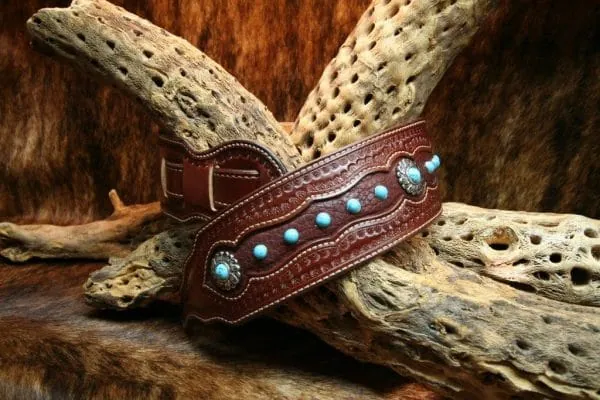
There is no need to match every color on the guitar. In fact, trying to repeat every detail can make the whole setup feel busy. Choose one or two relationships instead. A brown tooled strap may echo the neck or wood grain. Turquoise details can pick up a small accent on the guitar. Silver conchos can sit comfortably with chrome or nickel hardware. The idea is to make the strap belong with the instrument while leaving the guitar itself room to be seen.
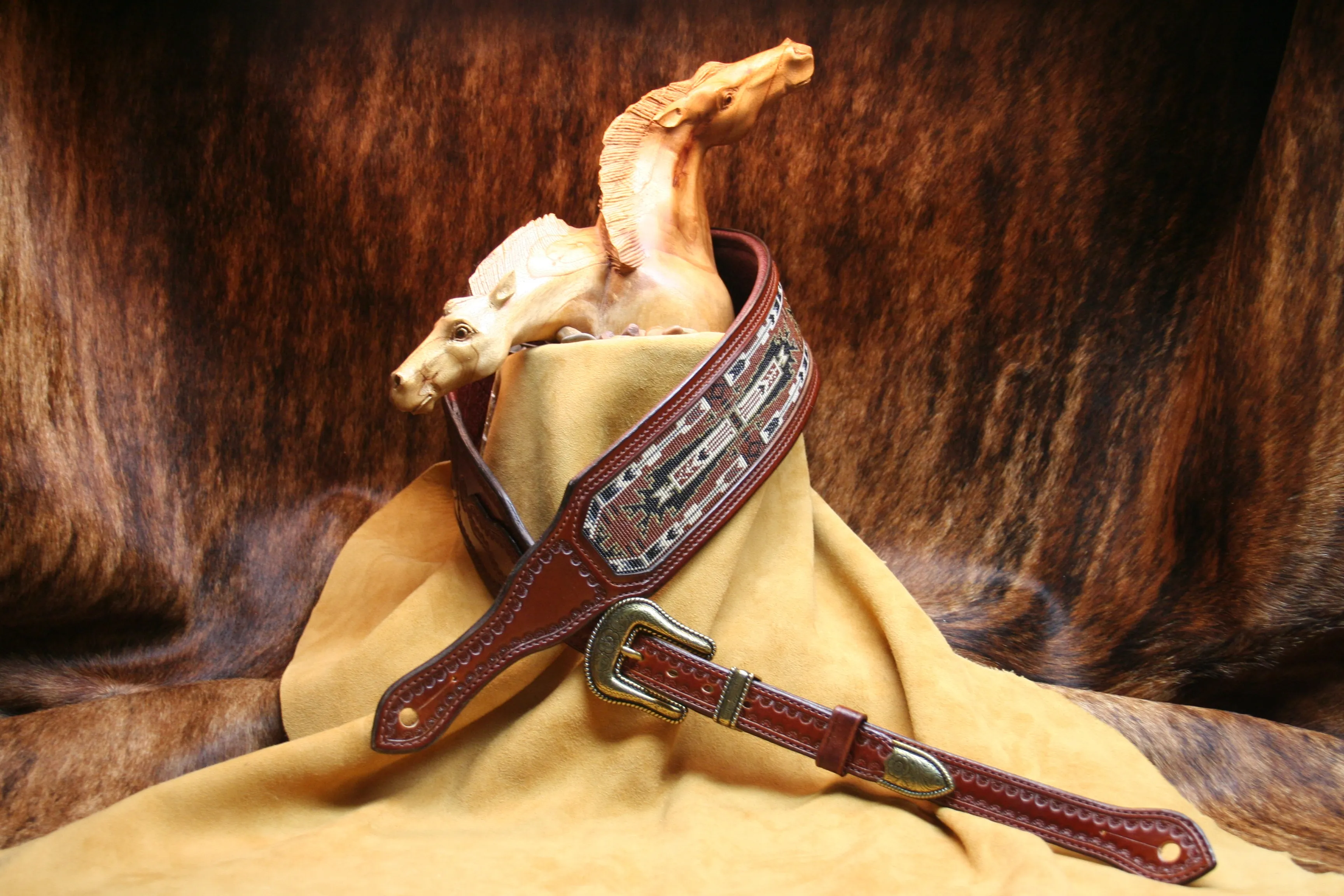
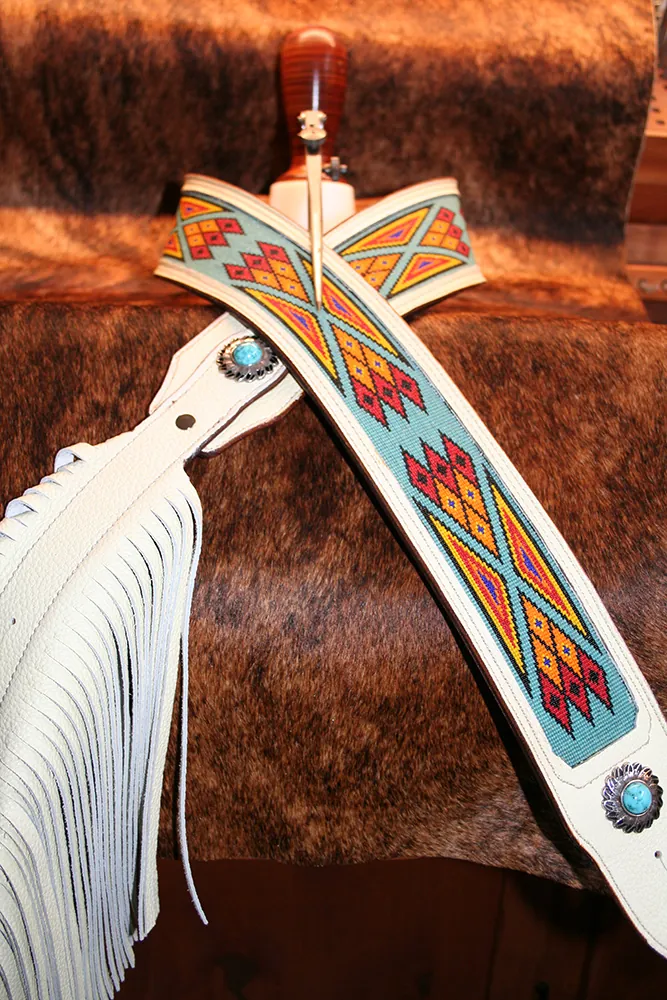
For players who want more color, tooling and beadwork can work together when each has a clear role. Tooling can frame the leather and give the piece structure, while a hand-beaded inlay carries the main pattern. The result is richer than either detail on its own, provided the shoulder shape and fit remain the first priorities.
Plan for the way a working strap will age
Leather gets its character from use, but a guitar strap is not a belt that spends most of its life flat in a drawer. It bends at the strap buttons, moves over a shoulder, rubs against clothing, and may travel in a case with cables, picks, and hardware. A tooled strap should look better as it becomes familiar, but it still benefits from basic attention before dryness, dirt, or a damaged end gets the chance to become a bigger problem.
After a rehearsal or show, give the strap a quick look before it goes back in the case. Check the button holes for stretching, make sure any buckle or adjustment slot is fully seated, and wipe away obvious dust or moisture with a soft dry cloth. Do not soak the leather or leave it pressed against something wet. If the strap has beadwork, avoid snagging it on a cable, stand, or sharp edge while you are packing up. These are small habits, but they protect the parts of the strap that do the hardest work.
When the leather starts to look dry, use a conditioner that is appropriate for finished leather and test it first on an inconspicuous area. Heavy oils, harsh cleaners, or a rushed treatment can change color and soften detail in ways you did not intend. The goal is not to make a handmade strap look new forever. It is to keep the leather healthy enough to carry the guitar well while the pattern, finish, and small marks collect the history of the music you have played with it.
Store the strap loosely when possible instead of folding it sharply under the guitar or cinching it around the headstock. A gentle loop is easier on the leather, especially around decorated sections and stitched edges. If you keep the strap on the guitar in its case, make sure the hardware is not resting against the finish. The same care that protects the guitar also helps the strap remain something you want to use for years.
Know when custom work is worth it
Custom work makes sense when you know what is missing from store-bought straps. Maybe the guitar is heavy and needs more support, but the straps that fit are too plain. Maybe you have a favorite Western pattern in mind but need a fixed length. Maybe the guitar already has strong visual character and you want the leatherwork to support it without overdoing it.
Southwest Distinctions builds straps around the player, the guitar, and the details that belong with both. The starting choices can be practical: fixed or adjustable fitting, padded or non-padded construction, shoulder width, leather color, and where the hardware needs to sit. From there, hand-tooled leather, beadwork, conchos, and inlays can turn the strap into a piece that carries the guitar and feels tied to it.
The guitar strap collection is a useful place to see the range of leatherwork. For a closer look at the decisions behind a made-to-order piece, visit the tooled leather guitar strap page or the broader custom leather guitar strap page. The workshop guide, How to Make a Leather Guitar Strap, also explains why the material and construction choices need attention before the decorative work begins.
Bring a photo of your guitar, your preferred playing height, and a few notes about straps you have liked or disliked. That is enough to start a useful conversation. A custom strap does not require you to know every leatherworking term. It requires an honest picture of how you want the guitar to feel and what you want the finished piece to say.
Made for your guitar
Start with the fit. Make the leatherwork personal.
Browse handmade leather guitar straps, or use custom orders to discuss the length, support, tooling, and details that belong with your instrument.
Questions about tooled leather guitar straps
What is a tooled leather guitar strap?
A tooled leather guitar strap has a decorative pattern worked into the leather rather than a flat, printed design on top. The pattern can be subtle or bold, but it should still leave the strap comfortable, secure, and suited to the guitar it carries.
Are tooled leather guitar straps comfortable?
They can be very comfortable when the strap has the right length and shoulder width for the player and instrument. Tooling changes the look of the leather, while the fit, lining, padding, and hardware placement determine how the strap feels in regular use.
Will a hand-tooled guitar strap work with a heavy guitar?
Yes, when the build is planned around the instrument. A heavier guitar may benefit from a wider or padded shoulder section, while a lighter instrument may suit a slimmer profile. Set the playing height first, then choose the support that feels right over time.
Can a tooled leather guitar strap be made to a custom length?
Yes. A custom strap can be fixed or adjustable and planned around your preferred playing height. A photo of the guitar, a button-to-button measurement at that height, and notes about the strap you use now provide a useful starting point.
Related posts
Buyer's guide
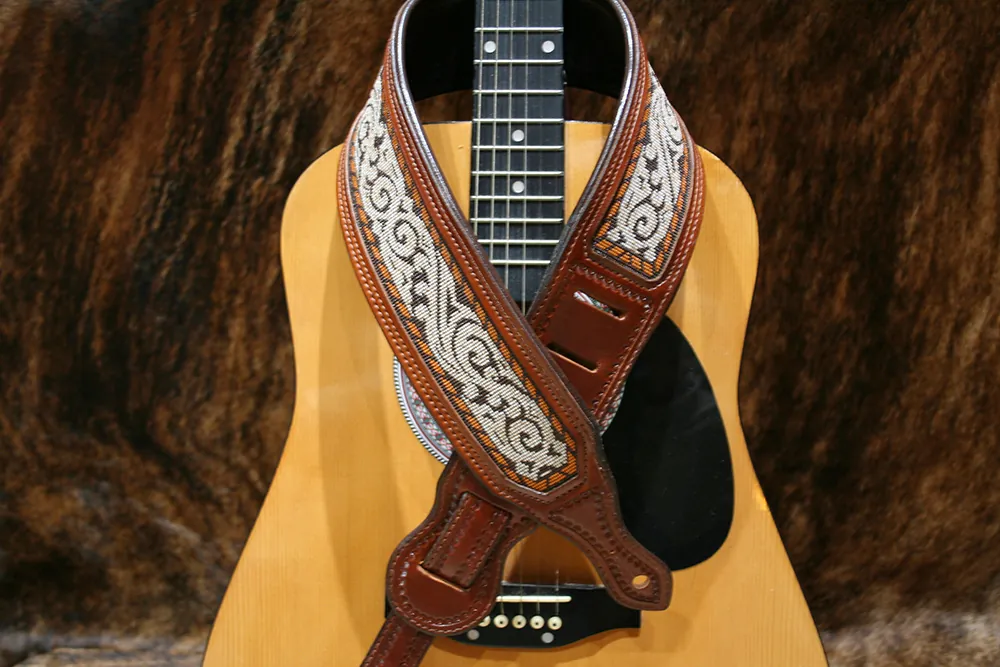
Padded Leather Guitar Straps: How to Choose One
A practical guide to choosing a padded leather guitar strap for the right width, length, support, and playing comfort.
Choose support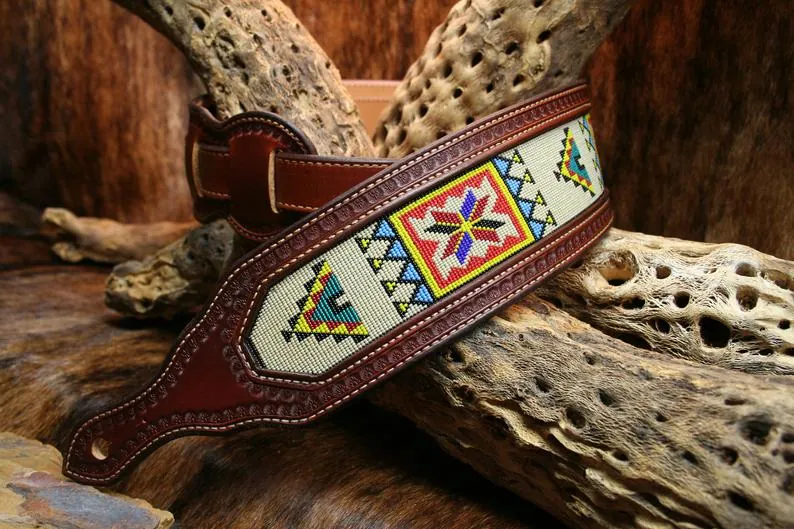
Fit guide
How to Adjust a Leather Guitar Strap
A practical way to set the right length, playing height, and comfort for a leather guitar strap.
Set your fit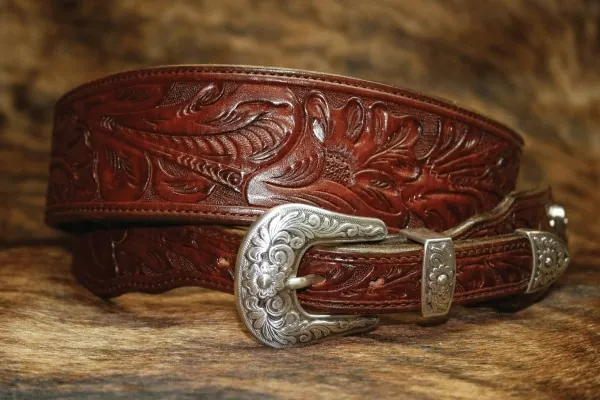
Workshop guide
How to Make a Leather Guitar Strap
A practical guide to the leather, layout, construction, and finishing choices behind a durable handmade guitar strap.
Read the guide