

A beaded guitar strap should do two jobs at once. It should carry the guitar comfortably and securely, then give the instrument a personal visual voice. The most memorable straps do not treat those jobs as competitors. Their leather, fit, beadwork, and hardware work together so the piece feels good through a set and still looks like it belongs with the guitar when the lights come up.
That is why a beaded strap deserves more thought than picking a color you like online. Look first at the guitar you play, how long you wear it, and where you want it to sit. Then look closely at the beadwork and the way it is built into the leather. This guide gives you a practical way to tell the difference between a strap that simply catches the eye and one you will want to use for years.
Start with the guitar, not the pattern
Every good strap choice starts with the instrument. A light electric used for a few songs at home asks for something different than a heavy solidbody, a large acoustic, or a guitar worn through long rehearsals. Before comparing bead colors or motifs, put on your current strap at your normal playing height. Play enough to notice where it presses, drifts, or makes you compensate with a raised shoulder or bent wrist.
That simple test tells you what the next strap needs to solve. If your guitar feels heavy after twenty minutes, you may need more shoulder coverage, padding, or both. If it hangs in the wrong place, settle the length before deciding whether the shoulder section is comfortable. If it already feels good but looks plain, the build may only need the decorative layer. The guitar strap width guide explains how width and guitar weight work together.
A beaded strap is still a working piece of gear. The most striking pattern cannot correct a strap that is too short, too narrow, or poorly attached. When fit comes first, the beadwork has a better foundation and the finished strap has a much better chance of becoming part of the way you play rather than something you save for photographs.

Understand what makes beadwork worth looking at
Beadwork can mean many things. Some straps use a printed or embroidered pattern. Others feature individual beads arranged one by one into a woven design. Neither needs to be dismissed on sight, but they are different kinds of work and should be judged by different expectations. If you want the depth, texture, and small-scale detail of real beadwork, ask how the pattern is made and how it is supported inside the strap.
At Southwest Distinctions, tiny Miyuki seed beads are placed on a needle and woven by hand on a loom. That method allows detailed lines, deliberate color relationships, and patterns that read differently up close than they do from across a room. The beadwork is planned as an inlay within leather rather than treated as an afterthought glued across a finished strap. It is slower work, but it is the reason a pattern can carry such fine detail.
When you compare examples, look at the edges of the beaded panel. The transition into the leather should appear deliberate and protected, not abrupt or flimsy. Look for a design with enough visual breathing room, especially on a wide shoulder section. Tiny work becomes more compelling when it has a clear frame and does not have to fight with too many competing details.
There is also no need to force a pattern into a cultural claim it does not make. Choose a design because its color, geometry, landscape influence, or story speaks to you. A thoughtful maker can help turn that starting point into an original piece without borrowing an identity or promise that does not belong to the work.
Choose shoulder support before decorative scale
Beadwork needs enough space to read, but a wider strap is not automatically the right choice. Width changes how the guitar’s weight spreads across your shoulder. A broad shoulder section can be a sensible answer for a heavy guitar, a long standing set, or a player who knows that a narrow edge creates a hot spot. A slimmer build can suit a lighter instrument or a player who values a close, low-profile feel.
Think of decoration as following the structure. A wider strap gives room for a broad beaded inlay, a tooled border, or a more detailed scene. A narrower strap may call for a centered band or a quieter motif that feels balanced with the guitar rather than crowded. The right design is one that still reads beautifully when the strap is curved over a shoulder, not only when it is lying flat on a table.
Padding is a separate choice. Width spreads the load; padding changes the feel where that load meets your shoulder. A padded shoulder section can help a heavier instrument feel easier to live with, but it should not be used to hide an incorrect length or insecure attachment. The padded leather guitar strap guide can help you decide whether support is the main job your next strap needs to do.

Check the working parts before you order
A beautiful strap has to meet the guitar securely at both ends. Before ordering, check the strap buttons on the instrument and notice how your current strap seats under their heads. Leather ends should lie flat, engage fully, and remain substantial around the button holes. They should not be split, stretched thin, or only partly attached because a hole is the wrong size.
Next, decide whether you want fixed or adjustable length. A fixed strap can feel clean and consistent when you wear one guitar at the same height every time. An adjustable leather tail or buckle gives more range for players who change guitars, change styles, or are still finding their preferred position. The important point is that the adjustment lands away from the spot where the shoulder is carrying weight. A buckle that looks handsome on a product photo can become tiresome if it settles directly on a pressure point.
Some players add strap locks for active stage movement or valuable instruments. Locks can be useful, but they are not a substitute for sound leather ends and well-maintained strap buttons. The guitar strap hardware guide covers the checks worth making before rehearsal, travel, or a show.
Players with an acoustic guitar that has only one strap button have another decision to make. The headstock attachment needs to suit the instrument and the strap, without forcing the leather into an awkward angle. Do not improvise with an attachment you do not trust. A secure, purposeful setup protects both the instrument and the work that went into the strap.
Make the colors belong with the instrument
Beadwork gives you a chance to bring color to a guitar without changing the guitar itself. The best place to begin is not “what matches exactly?” but “what relationship feels right?” A brown leather strap can echo a wood finish or warm sunburst. Turquoise can pick up a small accent in the guitar’s hardware or case. A high-contrast pattern can give a simple instrument a strong stage presence.
Choose one leading idea and let the rest support it. A busy guitar often works best with a strap that has a simpler central pattern or a restrained border. A plain guitar can carry a larger, more colorful piece of beadwork. If you also want tooling, conchos, or fringe, decide which element should lead. Strong custom work feels composed because it has a hierarchy, not because every possible detail was added.
Bring a photo of your guitar when discussing a custom piece. A good photo makes decisions about leather color, hardware finish, width, and visual scale much easier. It also helps a maker see what will look balanced when the guitar and strap are together, which is the only context that really matters.

Plan for the way the strap will be used
Leather and beadwork both reward ordinary care. Before playing, check the strap ends, the adjustment point, and any locks. When packing up, keep the strap away from sharp cable ends, rough case hardware, and anything that could catch the beaded panel. If it gets wet, let it dry naturally in a well-ventilated place rather than applying direct heat.
Store the strap in a gentle loop when you can. Sharp folds put stress on leather and decorated sections alike. A quick wipe with a soft dry cloth removes dust after a rehearsal. If the leather needs conditioning, use a product appropriate to finished leather and test it in an inconspicuous place first. Heavy oils and rushed cleaning can change color or leave residue around the detailed work.
Care is not about keeping a handmade strap frozen in time. Good leather develops character as it is played. The practical goal is to keep the strap secure, comfortable, and ready for the next session while the small marks and patina become part of its story.
Use a short test before settling on the details
When you can, test the intended width and playing height with the guitar before finalizing a custom strap. Stand with the instrument, play familiar rhythm work, reach for the upper frets, and move the way you do when rehearsing. Give the test long enough for a pressure point or an awkward buckle position to show itself. A few useful notes about what changes after ten minutes can be more valuable than a perfect measurement taken at rest.
This test also clarifies the visual brief. When the guitar is in playing position, notice what is visible from the front, where the decorated shoulder section naturally falls, and whether the pattern feels like part of the instrument rather than an extra layer. That is the moment to choose between a quiet inlay, a broad statement piece, or something in between.
Turn a useful brief into a personal strap
A custom beaded guitar strap is most successful when the conversation starts with how you play. Share the guitar, your normal playing height, whether you sit or stand, how long you usually play, and what you want to change from your current strap. Those details guide the shoulder width, length, padding, and placement of the adjustment hardware.
Then bring the personal direction: a favorite color family, a pattern you are drawn to, the mood you want the guitar to carry, or an element in the instrument that deserves an echo. Southwest Distinctions can build the leather foundation first, then use hand-tooled details, beadwork, conchos, lining, and hardware to make the piece your own. That sequence keeps the strap useful and lets the artwork land where it has room to matter.
Browse the guitar strap collection to see finished examples, then visit custom leather guitar straps for the practical choices behind a made-to-order piece. When you have a guitar photo and a few notes about fit, the custom order page is the direct place to start.
Made for your guitar
Start with the fit. Let the beadwork make it yours.
Explore handmade leather guitar straps, or begin a custom order with your guitar, preferred playing height, and the details you want to carry on stage.
Questions about beaded guitar straps
What should I look for in a beaded guitar strap?
Start with secure strap ends, the right length, and enough shoulder support for your guitar. Then look at how the beadwork is made and protected. A beaded strap should be more than a decorative band added to an ordinary strap.
Are beaded guitar straps comfortable?
They can be very comfortable when the shoulder width, lining, padding, and playing height are planned for the instrument. Beadwork changes the look of the strap, while fit and construction determine how it feels through a rehearsal or show.
Can a beaded guitar strap be made to a custom length?
Yes. A custom strap can be fixed at a preferred playing height or made adjustable. Sharing the guitar, your normal standing position, and what you dislike about your current strap gives a maker a useful starting point.
How should I care for a beaded leather guitar strap?
Keep it dry, avoid catching the beadwork on sharp hardware or cables, and inspect the strap ends before playing. Store it in a loose curve rather than a hard fold, and use leather care products carefully around any decorated section.
Related posts
Guitar Culture
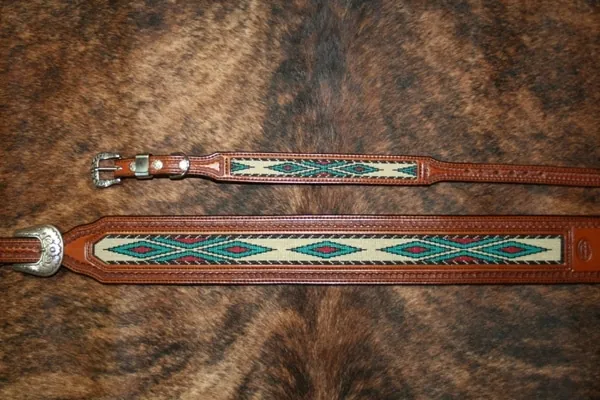
Guitar Strap Width: How to Choose the Right Fit
A practical guide to choosing guitar strap width for your instrument, playing time, comfort, and personal style.
Read the guide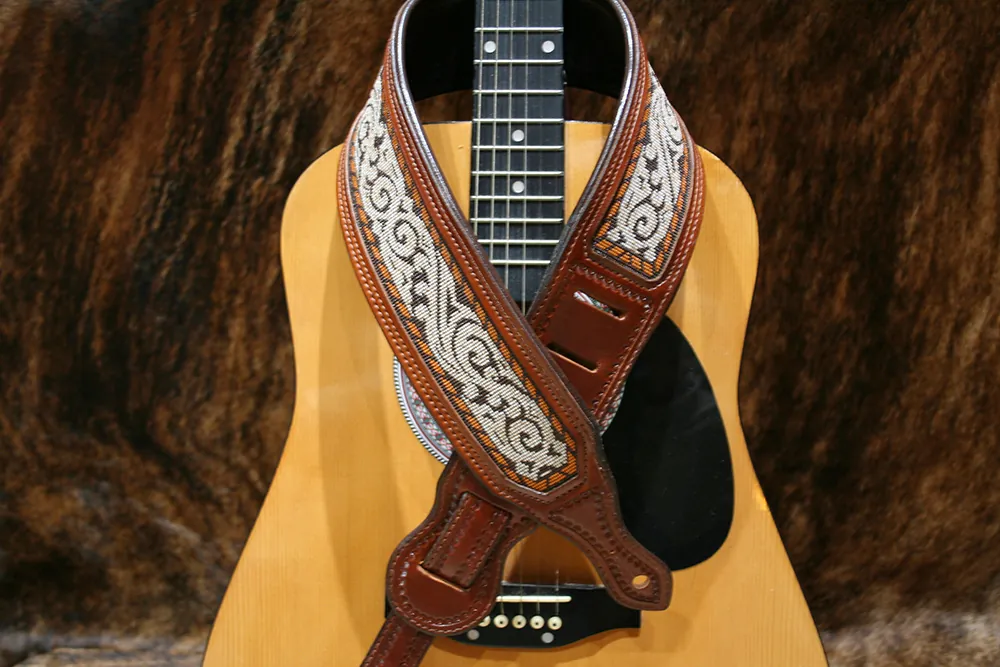
Guitar Culture
Padded Leather Guitar Straps: How to Choose One
A practical guide to choosing a padded leather guitar strap for the right width, length, support, and playing comfort.
Read the guide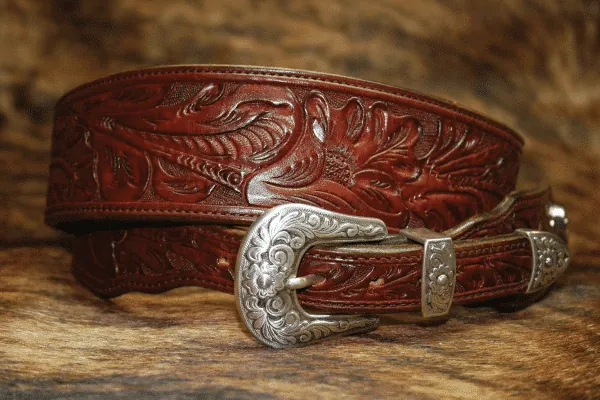
Guitar Culture
Tooled Leather Guitar Straps: What to Look For
A practical guide to choosing a tooled leather guitar strap for the right pattern, leather, fit, and long-term use.
Read the guide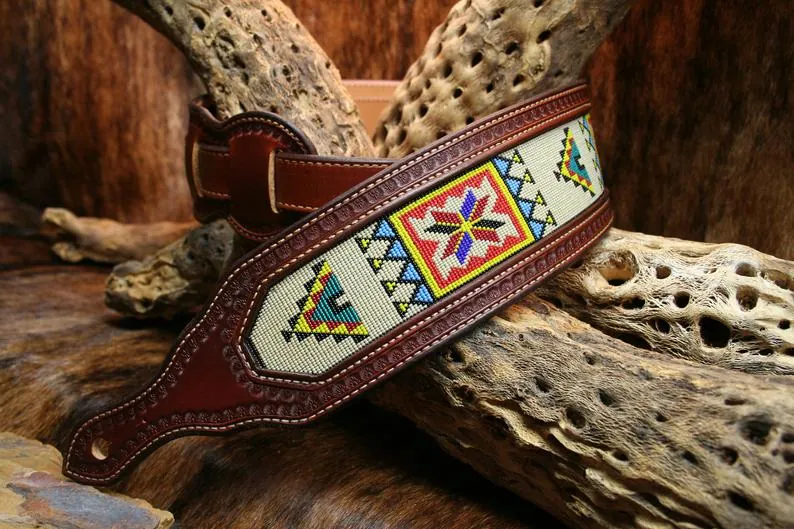
Guitar Culture
How to Adjust a Leather Guitar Strap
A practical way to set the right length, playing height, and comfort for a leather guitar strap.
Read the guide