

A guitar strap is easy to underestimate until it puts your guitar in the wrong place, slides when you move, or turns a good rehearsal into a sore shoulder. The useful types of guitar straps are not just different looks. They solve different problems: a quick first setup, a heavy instrument, an acoustic without two buttons, an active stage, or a guitar you want to keep wearing for years.
The fastest way to choose is to start with the job. Think about the guitar you actually play, how long you stand with it, the attachment points it has, and what you want to feel differently when you put it on. Then compare material, width, adjustment, and security. Style matters, but it is much more satisfying once the strap already feels settled and dependable.
Begin with the connection your guitar needs
Before comparing leather, woven webbing, or padding, look at the guitar. Most electric guitars and many steel-string acoustics have two strap buttons: one near the heel and one at the end of the body. A standard two-ended strap is made for that setup. The strap ends should sit fully beneath the button heads, and the buttons themselves should be firm before you trust them with the instrument.
Some acoustics have only the endpin button. These usually need a headstock tie at the neck end, or a purpose-made quick-release attachment. Ernie Ball describes its acoustic strap as using an extended leather loop for the headstock on instruments without a heel button, which is a useful example of why attachment type comes before decorative details. Their strap range also shows how a locking or acoustic design can be a distinct type of strap, not simply a standard strap in a different colour.
Classical guitars are another category. Many have no strap buttons at all, so a soundhole-hook strap may be the appropriate design. Do not force a conventional leather end onto unfamiliar hardware or add a second button by guesswork. If you have a one-button acoustic, our guide to attaching a guitar strap to an acoustic walks through the common setups before you shop.
Standard woven straps: light, adjustable, and straightforward
Nylon, polypropylene, polyester, and jacquard webbing straps are the familiar everyday option. They are usually light, easy to adjust, easy to pack in a case, and available in more colours and patterns than anyone needs. For a lighter guitar, a spare strap, or a player discovering their preferred height, a simple woven strap can be exactly right.
The material names matter less than the whole build. A well-made webbing strap should have sound stitching, strong ends, and an adjuster that stays where you set it. D’Addario’s current strap catalogue groups polypropylene, printed polyester, cotton, seatbelt-style material, suede, and leather as distinct materials, while also separating standard leather ends from several locking options. That useful breakdown is a reminder that the visible fabric is only one part of the choice.
The tradeoff is usually feel rather than capability. Thin synthetic webbing can move easily across some clothing, and a narrow shoulder section can make a heavier guitar feel more present as the set goes on. That does not make a woven strap a poor choice. It simply means that a light strap works best when lightness, quick adjustment, and a modest load are the priorities. If your current strap works for the first song but not the last, width or padding may be the next thing to test.

Cotton and woven fabric straps: soft feel with a different grip
Cotton and fabric straps often feel softer against a shirt or bare shoulder than slick synthetic webbing. Their woven surface can also sit a little more quietly against clothing, which some players like when a guitar tends to drift. Printed and jacquard straps add another kind of appeal: they can bring colour, pattern, and a personal visual note to a familiar instrument without changing the basic strap layout.
These straps suit players who want a light, flexible option and do not need a broad load-bearing shoulder panel. They are especially sensible for a light electric, an occasional acoustic session, or a backup strap that lives in a gig bag. Take a minute to inspect the ends and stitching, because the fabric face can look excellent while the actual connection points do all the important work.
Fabric does not remove the need to fit the strap. A soft material can still be too narrow, too short, or connected to a loose button. Start with the guitar hanging at the same useful height you find when seated, then play standing for several minutes. Our guitar strap adjustment guide gives a simple way to judge height through your hands and shoulders instead of a mirror pose.
Leather straps: made for a settled fit and a long relationship
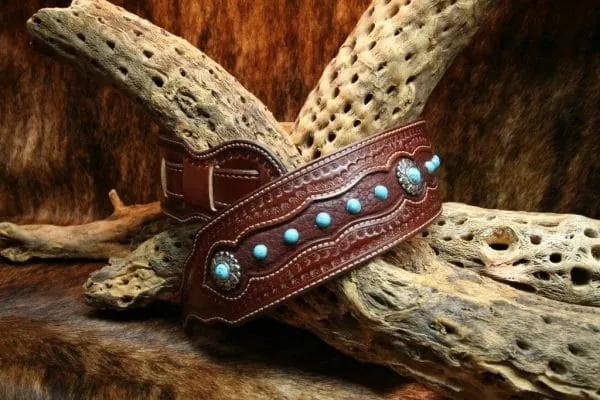
A leather guitar strap is often chosen because it feels substantial, looks at home on a favourite instrument, and can develop character with use. The good versions earn that reputation through sound leather ends, thoughtful adjustment, a shoulder section that suits the instrument, and stitching or construction that is meant for years of handling. Leather itself is not a promise of quality. The details around it make the difference.
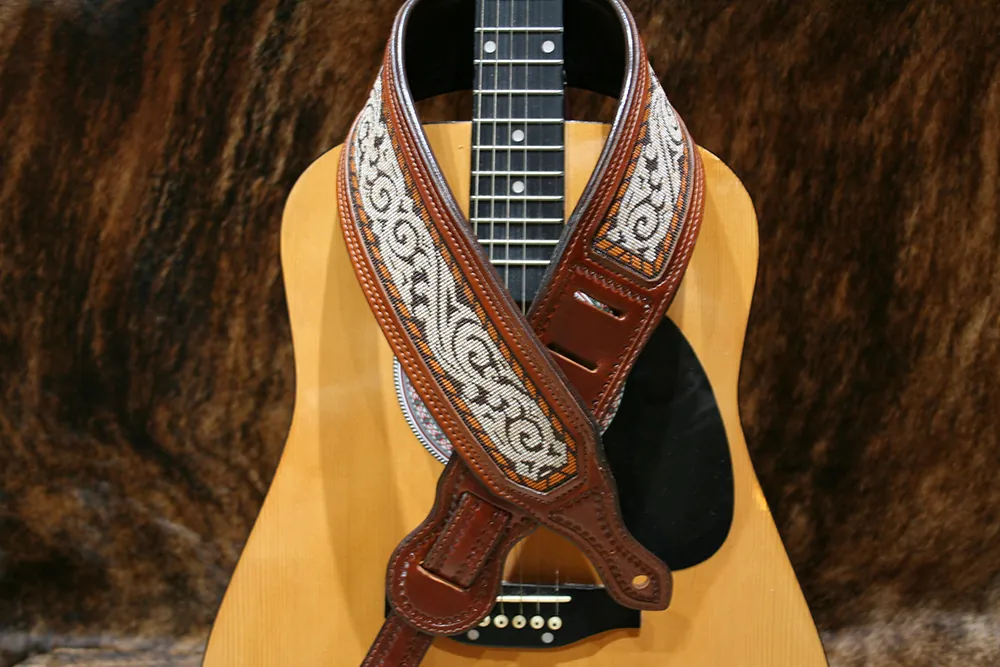
Leather can be a strong match for a player who wants a particular fit, a more stable feel on the shoulder, or a piece that is part of the guitar’s visual identity. It can also be the better route when a stock strap almost works but misses one important measurement. A handmade build can account for the guitar’s weight, the player’s usual height, a lined or padded shoulder, hand tooling, or loom-woven beadwork without treating the practical parts as an afterthought.
A new leather end may fit snugly over a strap button. That can be normal when the end sits fully in place, but it should never require damaging the leather, widening the hole blindly, or forcing hardware. Inspect it with the guitar supported. For more detail on the parts that make the fit work, see our guitar strap hardware guide.
Fixed-length and adjustable straps: choose for your real routine
Another useful way to sort guitar straps is by how they set length. Adjustable straps use a sliding buckle, holes, slots, or another system that lets the player move the guitar higher or lower. They are a sensible choice if you share a guitar, switch instruments, move between seated practice and standing rehearsal, or are still discovering what feels natural. A little flexibility lets you test a change without buying a new strap every time your preference shifts.
Fixed-length straps are a more deliberate choice. They work beautifully when one player wears one guitar at one familiar height. Without a long adjustment tail or sliding hardware, a fixed-length leather strap can keep the shoulder section clean and the decorative work uninterrupted. The tradeoff is simple: the length has to be right before it is built. That means measuring with the guitar on your body, not measuring an old strap flat on a table.
Neither type is more serious than the other. An adjustable strap is not a compromise when your playing calls for flexibility. A fixed strap is not a luxury when you have found a position that lets your hands work naturally every time. The question is whether you need the strap to change with your day, or whether you want it to become a known part of one instrument. If you are considering a custom length, start by using an adjustable strap at your preferred height for several sessions before you commit.
How to compare straps in a shop or from a product page
Product names can make a simple strap sound more complicated than it is. Strip the description back to a few details you can actually compare. First, check the stated adjustment range. It should reach your normal standing position without being at the very end of its travel. Next, look at the shoulder width and whether the maker describes padding, lining, or a shaped shoulder. Those details tell you more about comfort than a photograph of the pattern.
Then look closely at the ends and the adjustment. Are the ends leather, fabric, or another material? Does the description explain the locking system or compatibility with standard buttons? Where will a buckle or adjuster sit when you wear it? A strap can be beautifully made and still be wrong if the hardware lands against your shoulder, the button holes do not fit your guitar, or its shortest and longest settings miss the height you need.
Finally, match the price to the role. A simple webbing strap can be a smart practical purchase. A made-to-order leather strap can be worth more when the fit, support, and visual work are all being built around one guitar. Do not ask a low-cost spare strap to do the job of a long-session support strap, and do not assume a premium price automatically proves good fit. The instrument on your body is still the honest test.
Padded and wide straps: support for heavier work
Padding and width are often mentioned together, but they solve different parts of the comfort question. Width spreads the instrument’s weight across more of your shoulder. Padding adds a softer layer between the strap and your shoulder. A heavy guitar, bass, or long rehearsal may benefit from both. A light guitar may feel best with neither, because excess bulk can be more distracting than useful.
Fender’s beginner equipment guidance recommends a strap at least two inches wide and notes that added padding can help with shoulder and neck comfort. It is sensible advice, but it is a starting point rather than a universal prescription. The right amount of support depends on your instrument, posture, playing time, and how the guitar balances against your body.
Test the actual problem before you buy a thicker strap. If your shoulder only grows tired after an hour, more width or modest padding could help. If the guitar is awkward from the first chord, adjust length and angle first. If the neck falls away from you, look at the instrument’s balance and the material against your clothes. The padded leather guitar strap guide and width guide help separate those choices.
Locking straps and strap blocks: extra retention, not a cure-all
Locking straps are built around a mechanism that holds the strap more securely to the guitar. Some systems replace the guitar’s buttons with matching hardware. Others secure around existing endpins. Rubber strap blocks are a simpler removable option that sit over a strap button and help keep a properly fitting strap end from lifting off. D’Addario groups auto-lock, pad-lock, and endpin-specific designs as separate strap-end types, while Ernie Ball offers rubber blocks intended to fit over many existing button styles.
This category makes most sense for a player who moves hard onstage, changes instruments often, has a valuable guitar, or simply wants an extra layer of confidence. It does not make loose screws, split leather, or poorly fitting ends safe. The button must still be sound, the strap must still seat correctly, and the system must be checked before playing.
Think of a lock as part of a complete connection, not an invitation to stop looking at the connection. Our guitar strap locks guide explains the differences between permanent locking hardware and removable strap blocks, along with the basic checks that remain important either way.
Use a short fitting test before you settle on a type
Once you have narrowed the field, give each strap the same brief test. Attach it with the guitar supported, set the instrument at your usual height, and play things that reveal how you really move: open chords, a passage higher on the neck, a rhythm part, and a little standing or turning. Then sit down and stand again. You are not looking for a dramatic first impression. You are checking whether the strap lets the guitar stay where your hands expect it to be.
Notice the small annoyances. Does the strap twist? Does the shoulder edge roll? Does a buckle press where it should not? Does the guitar pull toward the neck or slide away from your body? Is the length easy to reset after you move? Those observations point toward a useful change. A pressure point may call for more width. A sliding guitar may call for a different shoulder material or a more balanced setup. A connection concern may call for fresh strap ends, better buttons, or a locking system.
Run the test long enough to get beyond the first thirty seconds. A strap that looks right standing still can reveal its real character halfway through a rehearsal. The goal is not to make every guitar feel identical. It is to let each one hang in a way that feels controlled, secure, and familiar. When a strap passes that test, its material and style become choices you get to enjoy instead of problems you have to manage.
A quick way to match strap type to the job
For a light electric or a first strap, begin with adjustable woven webbing and make sure the ends sit securely on the buttons. For a heavier guitar, long standing practice, or a bass, compare a wider shoulder section and padding before you decide on colour or pattern. For a one-button acoustic, choose an attachment made for the headstock end rather than treating a standard two-button strap as a complete solution.
For a guitar that sees energetic stage use, begin with healthy buttons and intact strap ends, then consider a locking system if it suits the instrument. For one treasured guitar you wear at a repeatable height, a made-to-measure leather strap can turn the fit, support, and visual direction into one coherent piece. For a guitar that changes hands or has several players, an adjustable design keeps the setup practical.
Those are starting points, not rules. A light guitar can deserve beautiful leather. A heavy guitar can wear a simple woven strap when the width and fit are right. The useful choice is the one that answers the real job without adding a new problem. Make the connection secure, make the height natural, make the shoulder comfortable, then pick the material and design that make you happy to take the guitar out of its case.
Instrument-specific straps: when one size really does not fit all
Most ordinary straps can work across several guitars, but some instruments ask more of the fit. A bass often benefits from a wider shoulder section because its weight and longer sessions can become tiring. A heavy solidbody may need the same consideration. A lightweight acoustic may be comfortable on a simple strap, but its neck-end connection can require a headstock tie. A guitar with an endpin jack needs a strap end that seats cleanly around that hardware.
There are also visual reasons to choose a more specific type. A strap that is intended for one treasured guitar can follow its colour, hardware, and character rather than looking borrowed from another instrument. That does not mean choosing style over comfort. It means building the appearance on top of a fit you have already tested. A leather bass strap has different support questions from a leather acoustic strap, even when both are made from excellent leather.
Beaded and tooled straps deserve the same practical scrutiny. The decorative work should be planned so that it does not interfere with the shoulder, adjustment, or attachment points. The payoff is a strap that can feel personal without becoming precious or difficult to use. Our beaded guitar strap guide explores how detail work and everyday use can live together.
Choose from a problem, not from a product name
The clearest decision usually begins with a problem you can name. If you need a light, uncomplicated first strap, start with a standard woven design. If a heavy guitar wears your shoulder out, compare width and padding. If the strap keeps slipping or the instrument feels vulnerable during an active set, inspect the buttons and consider a locking system. If your guitar has one endpin or unusual hardware, solve the attachment first.
Then test the result honestly. Put the strap on the guitar, set a comfortable standing height, play familiar chords and higher-neck passages, sit down, stand again, and move the way you actually move. Notice whether an edge folds, a buckle sits in the wrong place, the guitar pulls at the neck, or the connection feels reluctant. Small observations tell you more than a label such as premium, vintage, or deluxe.
Once the working questions are answered, choose the piece you want beside you. That may be a straightforward woven strap for an easy practice guitar, a padded build for a heavier instrument, or handmade leather that carries a particular colour, tool pattern, or beadwork. The best type is the one that helps the guitar feel ready to play.
When a handmade leather strap makes sense
A handmade leather strap becomes especially useful when the usual choices are close but not quite right. You may know that you need more shoulder support, a different adjustment range, a particular attachment detail, or a design that belongs with one instrument. Those are not small luxuries when they change how a guitar sits with you through every rehearsal and show.
Southwest Distinctions makes leather guitar straps around the player and instrument, with hand tooling, loom-woven beadwork, lined and padded options, and a custom conversation that begins with the way the guitar needs to feel. Explore the handmade guitar strap collection, see custom leather guitar straps, or begin a custom order with a photo of the instrument and the practical details you want to solve.
Made for the guitar you play
Start with the fit. Let the leather tell the rest of the story.
Explore handmade leather guitar straps, or begin a custom order around your instrument and the way you play.
Questions about types of guitar straps
What type of guitar strap is best for a beginner?
A simple adjustable strap with sound ends is usually the best place to start. Choose a material and width that feel comfortable with your own guitar, then spend a few minutes testing standing height and attachment before deciding that you need a more specialised strap.
Are leather guitar straps better than nylon straps?
Neither material is automatically better. Nylon and polypropylene are light and straightforward, while leather can offer a more substantial feel, durable construction, and a custom fit. The better choice depends on your guitar’s weight, playing time, comfort preferences, and budget.
Do guitar strap locks work with every strap?
Not always. Locking systems have their own hardware and fit requirements, while rubber strap blocks depend on the button and strap end. Check the maker’s instructions, make sure the button is secure, and test the connection with the guitar supported before playing.
Do I need a different strap for an acoustic guitar?
An acoustic with two strap buttons can often use a standard strap. An acoustic with one endpin needs a headstock tie or a purpose-made attachment at the neck end. Classical guitars may need a soundhole-hook strap instead of a standard button-to-button design.
Related posts
Guitar Culture
Guitar Strap Width: How to Choose the Right Fit
A practical guide to choosing guitar strap width for your instrument, playing time, comfort, and personal style.
Read the guideGuitar Culture
Padded Leather Guitar Straps: How to Choose One
A practical guide to choosing a padded leather guitar strap for the right width, length, support, and playing comfort.
Read the guide
Guitar Culture
Guitar Strap Locks: A Practical Guide
A practical guide to choosing guitar strap locks, strap blocks, and a secure setup for the way you play.
Read the guideGuitar Culture
How to Attach a Guitar Strap to an Acoustic Guitar
A practical guide to attaching an acoustic guitar strap securely, whether your guitar has two buttons, one endpin, or an endpin jack.
Read the guide